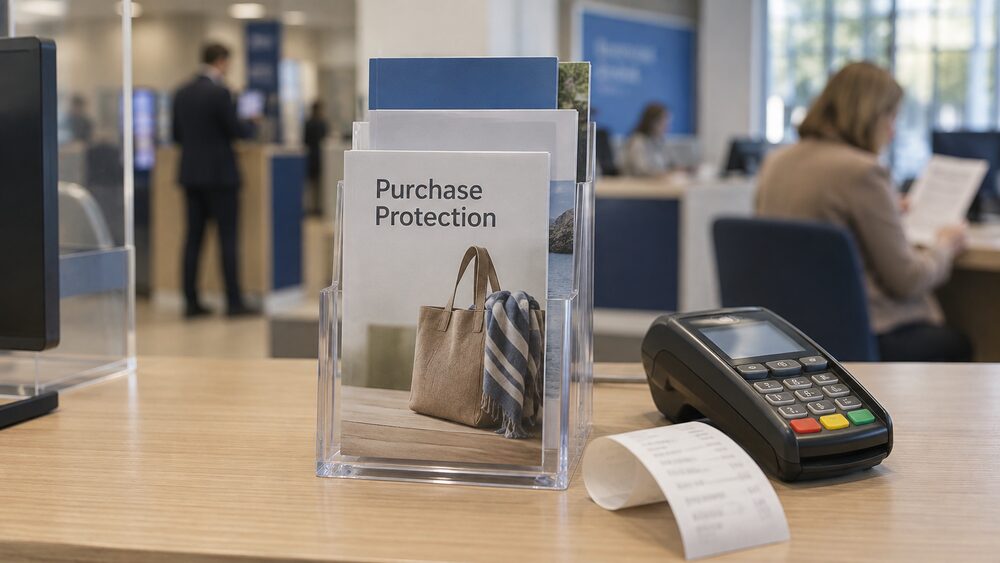
Buy now pay later and a credit card now give you the same core protection on a qualifying purchase, but only if the agreement was taken out on or after 15 July 2026. From that date the FCA regulates buy now pay later under the name Deferred Payment Credit, and a single item costing between £100 and £30,000 bought through a regulated provider carries the same Section 75 rights as a credit card purchase1. Your buy now pay later provider and the retailer are both jointly responsible if anything goes wrong2.
The dividing line is the date, not the shop or the amount alone. If you took out a buy now pay later agreement before 15 July 2026, it continues under the existing rules, without Section 75 or access to the Financial Ombudsman Service3. That leaves the retailer, a chargeback claim through the card you used to pay the instalments, or your ordinary consumer rights on faulty or undelivered goods.
A credit card has carried Section 75 protection for far longer, and it still applies to credit card purchases rather than debit card purchases4. The practical difference between the two is now narrower than it was, but it has not disappeared: the rules on what a lender must tell you, how a complaint is handled and what happens if you pay through a third party all still differ.
Buy now pay later is now regulated as Deferred Payment Credit
Deferred Payment Credit is the formal name for what shoppers call buy now pay later. The FCA describes it as an interest-free form of credit, repayable in 12 or fewer instalments, over 12 months or less5. The government's own definition is the same shape: interest-free instalment credit that lets borrowers divide the cost of purchases into regular payments over a period not exceeding 12 months8. A buy now pay later agreement is regulated when the lender and the supplier of the goods or services are different businesses, which is the normal arrangement at a checkout5.
The route to regulation was long. On 2 February 2021 the government announced its intention to regulate interest-free buy now pay later products, after the Woolard Review recommended bringing unregulated buy now pay later within regulation as a matter of urgency5. The unregulated market had more than trebled in size in 20209. Parliament approved plans to regulate unregulated buy now pay later credit in July 2025, and rules regulating the sector came into force in July 202610.
What changed for a shopper is mostly about information and checks. Providers must give clear information about your agreement, the payment amount and due date, and must explain what happens if you miss a payment7. Before offering buy now pay later, providers have to carry out affordability checks3. If you miss a repayment, firms need to contact you to let you know and explain what this means, and lenders need to provide support if you are struggling to make repayments5. All buy now pay later providers must be authorised and regulated by the FCA7.
Protection on buy now pay later purchases made before 15 July
The new rules only apply to buy now pay later agreements taken out from 15 July 20263. If you already have an agreement from before that date, it continues under the existing rules, without the new protections such as Section 75 or access to the Financial Ombudsman Service3. The Financial Ombudsman Service can look at a complaint only if you took out the agreement on or after 15 July 20261.
That leaves older purchases with the routes that existed before regulation. If a company stops trading or goes out of business, you can still ask for chargeback through the card you used to make payments to your buy now pay later account11. Chargeback lets consumers challenge and try to recover payments made using a debit or credit card, although it only applies in certain circumstances9. It is a scheme rule rather than a legal right, and your bank or credit provider might not agree to it11.
Your ordinary consumer rights still apply to the goods themselves. If something you bought online is faulty, not as described or never arrives, the retailer owes you a remedy under consumer law, and the fact that you paid in instalments does not remove that. What you lose on an older agreement is the extra layer: the lender standing behind the retailer, and an ombudsman to take a complaint to if the firm will not put things right.
Chargeback when you repay buy now pay later by card
Chargeback is the fallback most people reach for when Section 75 is not available. If you used a debit or credit card to make payments to your buy now pay later account, you might be able to start a chargeback on that card, but your bank or credit provider might not agree to it6. Citizens Advice puts it plainly: ask for your money back using chargeback if you paid with a debit card or charge card, or with a credit card or buy now pay later and you cannot use Section 756.
The scheme has limits worth knowing before you rely on it. A chargeback claim can only recover the amount paid on the debit or credit card, not any other consequential losses12. It covers debit card purchases, and credit card purchases where the price of the goods is less than £100, which is the point at which Section 75 would not apply anyway13. Debit cards offer chargeback protection on all purchases, but not Section 7514.
There is a further trap when a card sits behind another payment method. If you used a debit card or a credit card to service an online payment method such as PayPal, it is unlikely you will be able to use either the Consumer Credit Act 1974 or the chargeback scheme to claim from your card provider13. The same logic applies to paying a buy now pay later account with a credit card: the chain between you, the creditor and the retailer is broken.
| Route | What it covers | Who decides |
|---|---|---|
| Section 75 | Regulated buy now pay later or credit card purchases of £100 to £30,000, from 15 July 2026 for buy now pay later1 | A legal right, so the lender is liable |
| Chargeback | Debit card payments, and credit card payments under £10013 | Your bank or card provider, which might not agree6 |
| Retailer remedy | Faulty, misdescribed or undelivered goods | The retailer, under consumer law |
Where buy now pay later protection falls short of a credit card
On the headline right, the two are now close. A buy now pay later purchase of a single item costing between £100 and £30,000 made on or after 15 July 2026 carries Section 75 protection, with the provider jointly liable in cases of faulty goods, non-delivery, or if the retailer goes out of business7. The government's own summary of the legislation says buy now pay later users will benefit from strong rights, such as those under section 75 of the Consumer Credit Act, making it easier to obtain refunds for issues like faulty goods15.
The differences sit in the detail of the agreement rather than the refund right. Most provisions in the Consumer Credit Act related to information disclosure are disapplied for buy now pay later agreements15. That means the paperwork you receive is not the same as a credit card statement and agreement, even though the refund protection now matches on eligible purchases.
There is also the question of what happens when a card is used inside another payment service. Using your credit card with third-party payment systems can mean you lose important Section 75 protection on items costing more than £100, and that list includes PayPal, Google Wallet, buy now pay later schemes such as Klarna and Clearpay, and third-party sellers on Amazon16. There is no protection if you load your PayPal account with money using a credit card and pay a supplier from the balance17.
The practical reading is that a credit card remains the more predictable route when a purchase is large and the seller is unfamiliar, because the protection has applied for decades and the rules are well tested. A regulated buy now pay later agreement now offers the same refund right on eligible purchases, but it is newer, and the surrounding information rules are lighter.
Store finance, catalogue credit and other names for buy now pay later
Buy now pay later is not one product. It is a family of arrangements that let you take goods now and pay later, and the names on the high street do not always make the differences clear. Store finance is also called buy now pay later credit18. Catalogue credit and store cards sit in the same territory, and payment protection insurance was historically sold with loans, credit cards, mortgages and other types of credit including car finance and catalogue accounts19.
The providers shoppers meet most often are Klarna, Clearpay, Laybuy, PayPal and Amazon2. Buy now pay later launched in the UK in 2014 and has become a major growth area20. In 2021, over 20,000 merchants offered buy now pay later at checkout, a figure the government believes has at least doubled as of November 20248. Providers make their money by charging retailers a transaction fee, and retailers see it as a way to increase sales value and attract customers20.
That funding model explains a lot of what you see at the checkout. Because the retailer pays, the option is promoted to you as a convenience rather than as borrowing, and research has found most users think of buy now pay later as a way of spreading payments, not as a form of borrowing21. StepChange has argued that firms should not be able to use the term buy now pay later to market credit products that carry interest during the offer period22.
"Usually there is no interest to pay on BNPL, but it is still a loan."
Some products that carry the buy now pay later label are not the interest-free instalment credit the rules now cover. A buy now pay later agreement is interest-free credit repayable in 12 or fewer instalments over 12 months or less5. Anything longer, or anything that charges interest during the offer period, is a different product with different rules, and the label on the checkout may not tell you which one you are being offered.
Choosing how to pay: what to check before you buy
The first thing to establish is which set of rules applies to the agreement in front of you. If it is a regulated buy now pay later agreement taken out on or after 15 July 2026, you have Section 75 rights on a single item costing between £100 and £30,0007. If it is an older agreement, or a product outside the definition, you do not.
The second is whether a credit check will happen and what kind. For anything you buy using buy now pay later, a lender will carry out a credit check to make sure you can afford the repayments2. Some providers carry out a soft credit check and some carry out a hard credit check7. Klarna, for example, performs a soft credit check when you apply for its buy now pay later financing24. Buy now pay later lenders are now sharing information with credit reference agencies, including details of purchases, late payments and unpaid purchases25.
The third is what happens if a payment is missed. You may be charged a penalty fee if your payments are late or if you miss a payment, and your provider may pass information about the missed payment to credit reference agencies, which will affect your credit score7. Missed payments on a buy now pay later agreement will show on your credit score and can make it harder to get credit in the future2.
A short checklist before you choose:
- Check whether the agreement is regulated buy now pay later, and the date you are taking it out, because that decides whether Section 75 applies3.
- Check the total cost and the repayment schedule, which providers must now set out clearly before you borrow3.
- Check whether a soft or hard credit check is used, since a hard check leaves a mark7.
- Check what the late payment fee is and when it is charged7.
- If the purchase is over £100 and the seller is unfamiliar, weigh a credit card, which carries Section 75 as a long-established right4.
Who pays the retailer, and who your lender is
When you use buy now pay later, the provider pays the retailer and you owe the provider. Your credit agreement is with the buy now pay later provider, not the retailer7. That matters because it decides who you deal with on repayments, missed payments and refunds, and it is the reason Section 75 works at all: the lender is a separate business from the seller, so it can be held jointly responsible.
The joint liability is the heart of the protection. Your buy now pay later provider and the retailer are both jointly responsible if anything goes wrong, which means a partial or full refund if goods do not arrive, are faulty, or the retailer stops trading2. The same principle applies to a credit card, where the card issuer is jointly liable with the supplier.
Where a firm has stopped trading, the practical steps are the same whichever way you paid. Ask the retailer first if it is still trading, then use the card route if you have one, and keep records of the order, the payments and any correspondence. If the agreement is a regulated buy now pay later one taken out on or after 15 July 2026, a complaint can go to the Financial Ombudsman Service if the provider will not resolve it1.
Complaints and free help
If a buy now pay later provider will not put something right, the Financial Ombudsman Service can look at a complaint about an agreement taken out on or after 15 July 20261. The ombudsman service is free to consumers and its decisions are binding on the firm. Complaints about older agreements fall outside that route, which leaves the retailer, chargeback, and the courts.
Free and impartial help is available if buy now pay later repayments are causing difficulty. StepChange and National Debtline both give free debt advice, and MoneyHelper offers guidance on paying safely online and on the payment methods that carry more protection14. If a purchase turns out to be a scam rather than a dispute, report it and seek advice rather than relying on the payment method to recover the money.
Sources25 cited
- Buy now pay later complaints Financial Ombudsman Service, 2026
- Buy now pay later StepChange, 2026
- 7 things you need to know about new buy now pay later rules Which?, 2026
- The Consumer Credit Act Which?, 2025
- Buy now pay later Financial Conduct Authority, 2026
- Getting your money back if you paid by card or PayPal Citizens Advice, 2026
- Buy now pay later Consumer Council, 2026
- Impact assessment: Buy-Now, Pay-Later legislation.gov.uk, 2025
- Festival refunds not guaranteed Financial Ombudsman Service, 2026
- Regulation of buy-now-pay-later credit House of Commons Library, 2026
- If a company stops trading or goes out of business Citizens Advice, 2026
- Cancellations and refunds: helping consumers with rights and routes to refunds Financial Conduct Authority, 2020
- Chargeback and the Consumer Credit Act Isle of Anglesey County Council Trading Standards, 2025
- Shop safely online MoneyHelper, 2026
- The Buy-Now, Pay-Later Regulations 2025: explanatory memorandum legislation.gov.uk, 2025
- Should I get a credit card? Which?, 2026
- Are credit cards still the safest way to pay? Which?, 2025
- Store finance debt StepChange, 2026
- Payment protection insurance Financial Ombudsman Service, 2026
- Buy Now Pay Later trends in the UK UK Finance, 2025
- Which? response to HM Treasury regulation of buy now pay later consultation Which?, 2022
- Overdrafts and buy now pay later StepChange, 2026
- Amazon and Barclays buy now pay later scheme explained Which?, 2022
- How to improve your credit score Which?, 2025
- Fraud victims who pay the wrong way could be left with nothing Which?, 2024
 Financial Ombudsman ServiceFree, independent help when a complaint about a firm is not put right
 FSCSProtects your money if a bank, insurer or investment firm fails
 FCA Warning ListCheck whether a firm is authorised before you deal with it
 MoneyHelperFree, impartial money and pensions guidance, set up by government
 Citizens AdviceFree advice on money, consumer and legal problems in England and Wales