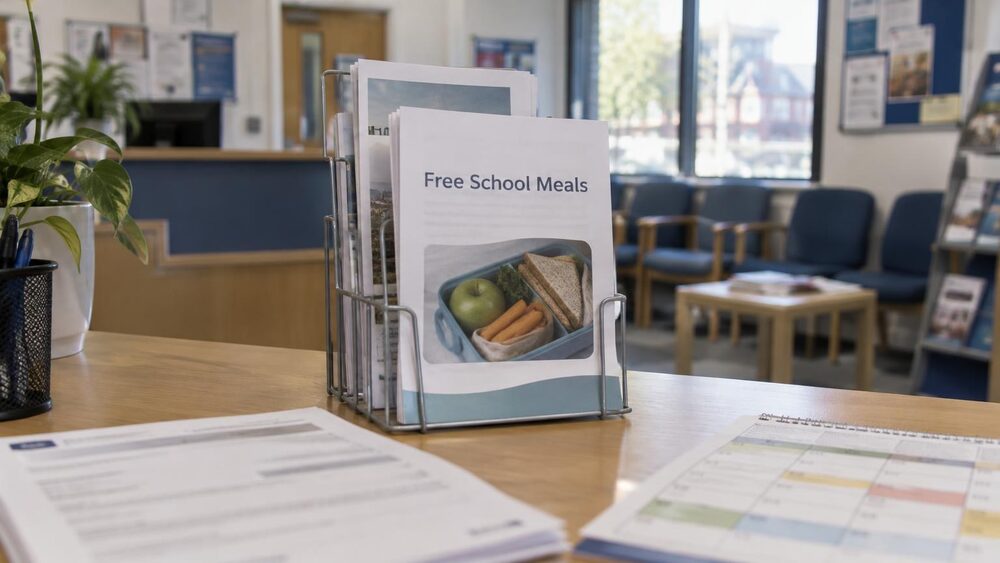
Free school meals (FSM) eligibility in England has been expanded so that all families on Universal Credit (UC) now qualify, starting this term for pupils in England1. Government estimates put the number of additional children qualifying at 500,0001.
Under the previous rules, FSM was targeted at households on UC with no earnings or earning under £7,400 a year1. Families on UC with earnings above that threshold become entitled this term, and will gain the equivalent of about £500 a year for each child that becomes entitled, based on the government's rate of £2.66 per meal; in some local authority areas charges are higher1.
The two groups face different processes. For existing targeted recipients there is often no need to register, as the Department for Work and Pensions tells councils who is entitled1. People in the new expanded group need to make a claim by filling in a form with their school or local authority, and for their local authority to receive funding from the DWP they need to do so by the time of the annual school census on October 11. Even if a UC award is made after the start of October, a family can still claim FSM and the award will last the whole of the school year1.
The expansion sits alongside a change to UC itself. The abolition of the two-child limit in April means the maximum amount awarded now increases by £3,640 per year for each child, which raises the earnings point at which a household's UC is fully tapered away1. Since April, families with three or more children can claim UC at earnings levels that previously made them ineligible1. Example cut-off points for qualifying for UC and FSM, for a single earner working as an employee paying 5% pension contributions, with no disabilities or childcare costs and the eldest child born before April 2017, are set out below1.
| Children | No housing costs, 25/26 | No housing costs, 26/27 | £200 per week rent, 25/26 | £200 per week rent, 26/27 |
|---|---|---|---|---|
| 2 | £39,648 | £41,664 | £64,008 | £66,168 |
| 3 | £39,648 | £51,276 | £64,008 | £77,604 |
| 4 | £39,648 | £62,292 | £64,008 | £89,040 |
The figures are a rough guide: households paying higher or lower rent, or with other eligible costs, will have different cut-off points1.
"the expansion of free school meals (FSM), which starts this term for pupils in England"
Why it matters for households
Families in England on UC whose earnings were above £7,400 a year now qualify for free school meals for their children, from the start of this term1. For each child who becomes entitled, the value is about £500 a year at the government's £2.66 per meal rate, and more where local charges are higher1. The change applies in England; Wales aims to have an equivalent system for the first two years of secondary school operating this year, with the policy still being developed, while Scotland and Northern Ireland are not following suit at present, though both apply a higher earnings threshold than was the case in England1.
Two practical points follow from the rules. First, families newly in the expanded group generally have to claim rather than being registered automatically, and local authority funding depends on claims being made by the October 1 census1. Second, the 5-week wait between claiming UC and an award being made means it will be difficult for applicants to qualify before that deadline, but a later award does not prevent an FSM claim, and the award lasts the whole school year1.
There is also a take-up gap. The most recent academic study suggested that over a third of households who qualify for UC do not claim it, a combined estimate for legacy benefits and UC together1. The kind of family likely to be entitled but not claiming is working, perhaps with multiple earners or jobs, and may not realise the level of earnings at which it is still possible to qualify1. More on how awards are calculated is in our guide to how Universal Credit is worked out, and on moving across from older benefits in moving to Universal Credit from legacy benefits.
What happens next
The annual school census takes place on October 1, the date by which claims must be made for local authorities to receive DWP funding1. The expansion applies for this term in England1. No further dates have been reported.
 Turn2usFree benefits calculator and grants search from a charity
 Citizens AdviceFree advice on money, consumer and legal problems in England and Wales
 GOV.UKOfficial information on tax, benefits and government services
 MoneyHelperFree, impartial money and pensions guidance, set up by government