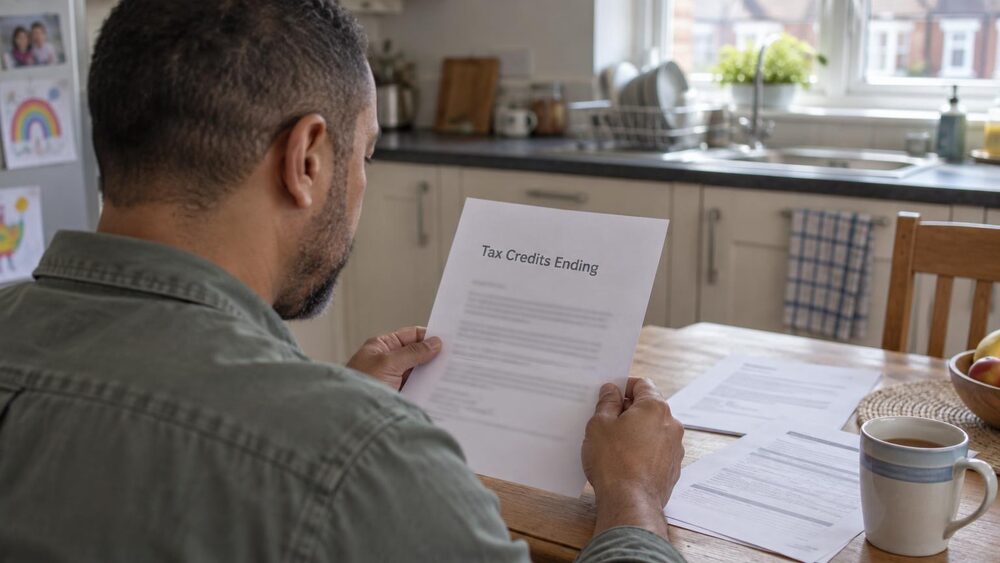
Legacy benefits are due to end by 31 March 2026, with remaining claimants required to move to universal credit by the date shown in their migration letter to avoid their payments stopping1. The Department for Work and Pensions (DWP) says most legacy benefit claimants have already been contacted, with final letters now going to people claiming employment and support allowance (ESA)1.
The government announced in 2012 that it would replace the legacy benefit system with a single payment, universal credit1. The process began in July 2022 after a pilot programme in 2019, and the original plan was for the move to be completed by 2028; in April 2024 the deadline was brought forward to March 20261. Tax credits closed to ongoing claims in April 2025, and universal credit has already replaced all new claims for income support and income-based jobseeker's allowance1. Turn2us states that the legacy benefits were abolished at the end of March 2026 and that universal credit became the main working age benefit2.
The benefits being phased out are tax credits, income-based jobseeker's allowance, income support, housing benefit and income-related employment and support allowance1. The move is handled through managed migration: the DWP sends a migration notice setting out when and how to claim, and claimants are not moved automatically1. Once the letter arrives, there are three months to submit a universal credit claim by the deadline shown; if no claim is made by that date, legacy benefits stop1. It currently takes around five weeks to receive a first universal credit payment1, and Gingerbread says claimants may have to wait around five weeks for that first payment5.
"If you don't apply by that date, your legacy benefits will stop."
According to a 2022 DWP analysis cited by Which?, 55% of legacy benefit claimants will be better off under universal credit, while 35% would have a lower entitlement1. Transitional protection tops up a universal credit payment to match what was previously received and is applied automatically1. It is not available to those who claim before receiving a managed migration notice, or who submit a claim after their personal deadline1. There is a one-month grace period after the deadline: a claim made within that month is automatically backdated and transitional protection remains available1. One Parent Families Scotland states that universal credit cannot be backdated4.
Some groups are outside the change. Claimants in supported or temporary accommodation can still claim housing benefit through their local council even if they receive universal credit for other living costs, and people who have reached state pension age are not affected by the move and can still claim housing benefit in the usual way1. Pension credit is not affected and remains in place1. The government has said it plans to bring pension credit and housing benefit closer together at some point in 20261. New style jobseeker's allowance and new style employment and support allowance sit outside the legacy system and are not being replaced by universal credit1. The government has set out plans to replace both with a single, time-limited "unemployment insurance" benefit from 2028-29, paid at the current employment and support allowance rate of £138 a week under proposals published in a Green Paper; these are not final and further detail is expected in a future White Paper1.
Why it matters for households
Anyone still receiving a legacy benefit who has not yet claimed universal credit is affected, and the date that matters is the one printed on their own migration notice rather than a single national date1. Payments stop if no claim is made by that deadline1. Because a first universal credit payment takes around five weeks to arrive, there can be a gap between the last legacy payment and the first universal credit payment, although some legacy benefits continue for a short period after a claim is made1. Where entitlement under universal credit is lower, transitional protection makes up the difference, but it is lost if a claim is made before the migration notice arrives or after the personal deadline1. Claimants who miss the deadline have a one-month grace period in which a claim is backdated and transitional protection is preserved1. Universal credit is means-tested, usually paid monthly, and can include amounts for housing, children, disability or caring2. In Scotland claimants can choose to be paid in two parts each month; in Northern Ireland it is normally paid in two parts, with the option to ask for one monthly payment, while elsewhere in the UK a request for two payments might not be allowed2. Universal credit cannot help homeowners with a mortgage6. Self-employed claimants have their award calculated using the amount the government expects them to earn each month, known as the minimum income floor6. Claimants must accept a claimant commitment, and payments can be reduced or stopped if its requirements are not met without a valid reason, which is called a sanction4.
What happens next
The deadline for legacy benefit payments is 31 March 20261. Claimants who cannot claim before their deadline are advised by Which? to contact the universal credit migration notice helpline as soon as possible, as the DWP can in some cases allow extra time while keeping transitional protection1. The government's stated plan to bring pension credit and housing benefit closer together is due to happen at some point in 20261. Proposals to replace new style jobseeker's allowance and new style employment and support allowance with a single "unemployment insurance" benefit from 2028-29 are not final, with further detail expected in a future White Paper1.
Sources6 cited
- DWP legacy benefits due to end by March 2026 - what it means for you - Which? which.co.uk
- Universal Credit guide: What is Universal Credit (UC)?
 | Turn2us turn2us.org.uk
- Universal Credit guide: What is Universal Credit (UC)?
 | Turn2us turn2us.org.uk
- Moving from older benefits to Universal Credit - One Parent Families Scotland opfs.org.uk
- Universal Credit | Gingerbread gingerbread.org.uk
- Benefits when you have a low income | Gingerbread gingerbread.org.uk
 Turn2usFree benefits calculator and grants search from a charity
 Citizens AdviceFree advice on money, consumer and legal problems in England and Wales
 GOV.UKOfficial information on tax, benefits and government services
 MoneyHelperFree, impartial money and pensions guidance, set up by government