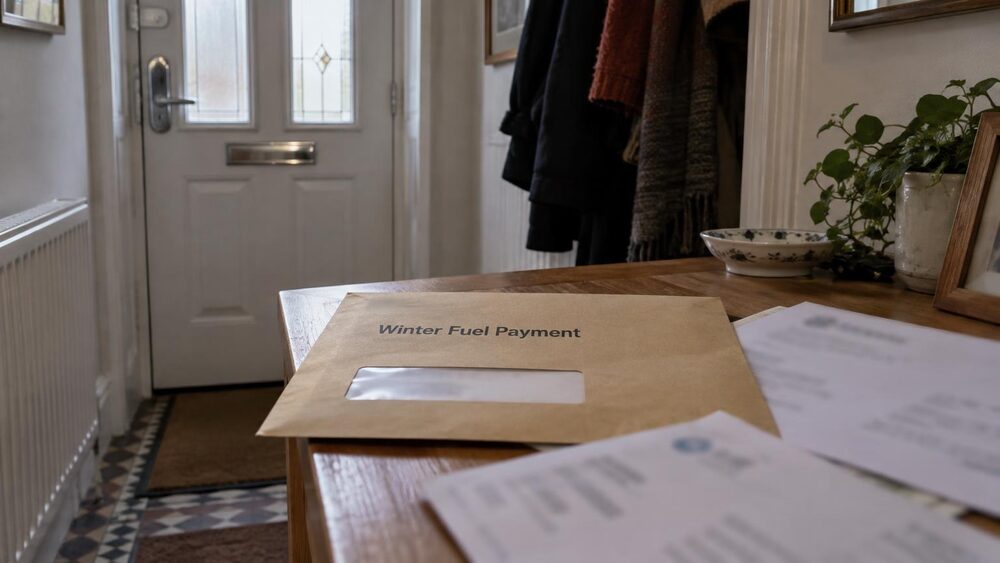
For winter 2024-25, the Winter Fuel Payment was restricted to those on income-related benefits such as pension credit, narrowing eligibility significantly from the universal payment that had applied until winter 2023-241. The payment is a tax-free annual sum to help pensioners cover energy costs during colder months, typically worth £200 per household, or £300 if someone is aged 80 or over, and is paid automatically between November and January1.
From winter 2025-26, the payment will once again be available to a wider group, using a fixed income threshold to determine eligibility1. Pensioners with a taxable income of £35,000 or less will keep the full payment, and that income measure includes state and private pension income, as well as savings interest and dividend payments1. Where income is above the threshold, HMRC will automatically recover the payment through self-assessment or PAYE, and those who know they will exceed the threshold will be able to opt out to avoid receiving the payment altogether, with the Department for Work and Pensions developing a system to allow this and details to follow1.
The Scottish government has announced it will apply the same £35,000 income threshold to its Winter Heating Payment from this year, and in Northern Ireland the Executive has confirmed the Winter Fuel Payment will also be reinstated for winter 2025-26 using the same income threshold as in England and Wales1.
Savings interest held outside an Isa counts as taxable income and can push a household over the £35,000 cap1. Which? gives the example of combined state and private pension income of £34,000, with £22,000 in a one-year fixed rate bond at a top rate of 4.51% AER: annual interest of £1,013 would push total income over the threshold by £131. Interest within the Personal Savings Allowance, £1,000 for basic-rate and £500 for higher-rate taxpayers, is still treated as taxable income when calculating eligibility1. The best one-year fixed-term deal peaked at 6.2% in October 2023, and rates have since been falling following cuts to the Bank of England base rate1.
"But for winter 2024-25, it was restricted to those on income-related benefits such as pension credit"
Why it matters for households
The restriction applied to winter 2024-25 only, so pensioners who received the payment in earlier winters on a universal basis did not receive it automatically for that winter unless they were on an income-related benefit such as pension credit1. For winter 2025-26 the test changes to a £35,000 taxable income threshold, which brings in pensioners above the benefit-based cut-off but excludes those above the threshold1. Because savings interest outside an Isa counts towards that total, a household's eligibility can depend on interest earned on cash held in taxable accounts, even where the interest falls within the Personal Savings Allowance1. The £35,000 threshold also applies to the Scottish Winter Heating Payment and to the reinstated Northern Ireland payment1.
What happens next
The Department for Work and Pensions is developing a system to allow pensioners who expect to exceed the threshold to opt out of the payment, with details to follow1. The £35,000 threshold takes effect for winter 2025-26 in England and Wales, and the Scottish government has said it will apply the same threshold to its Winter Heating Payment from this year1.
 Turn2usFree benefits calculator and grants search from a charity
 Citizens AdviceFree advice on money, consumer and legal problems in England and Wales
 GOV.UKOfficial information on tax, benefits and government services
 MoneyHelperFree, impartial money and pensions guidance, set up by government