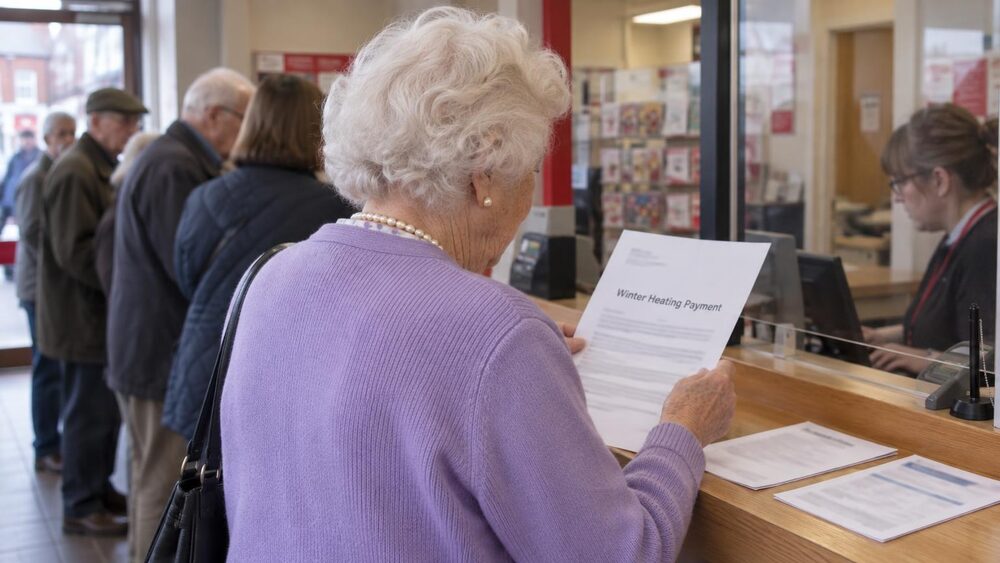
The Scottish Government introduced a Pension Age Winter Heating Payment to replace the Winter Fuel Payment in 2024/25, using devolved powers1. The change followed the Chancellor of the Exchequer's announcement on 29 July 2024 that, from winter 2024/25, households in England and Wales would no longer be entitled to the Winter Fuel Payment unless they received Pension Credit or certain other means-tested benefits1.
The Scottish payment was linked to Pension Credit and other qualifying benefits, in line with the approach taken in England and Wales2. The Winter Fuel Payment itself was introduced in 1997 as an annual tax-free lump sum for people of pension age in England and Wales to help with winter fuel bills; since 2000/01 the standard amount has been £200, with an additional £100 for households including someone aged 80 or over from 2008/091.
The Scottish Government later changed its approach. In November 2024 it said all pensioners would receive a payment of £100 in winter 2025/26, with households on Pension Credit receiving £200 or £300 depending on their age1. On 18 June 2025 it withdrew those regulations and said instead that all pensioners with income of less than £35,000 would receive Pension Age Winter Heating Payments of either £203.40 or £305.10 per household depending on age1. The Scottish Government announced that Pension Age Winter Heating Payments will be paid at a slightly higher rate than Winter Fuel Payments and will also be recovered via the tax system in the same way as Winter Fuel Payments2.
For Winter 2025 to 2026, Winter Fuel Payments were made to all pensioners in England and Wales. Pensioners with taxable income over £35,000 per annum, and not in receipt of Pension Credit or other qualifying benefits, will have the payment recovered through the personal tax system2. The Minister for Pensions announced that everyone over pension age in England and Wales with an income up to and including £35,000 would benefit from a Winter Fuel Payment in 2025/261.
"Using devolved powers, the Scottish Government introduced a Pension Age Winter Heating Payment to replace the Winter Fuel Payment in 2024/25."
The Work and Pensions Committee, in a report published on 24 July 2025, said the decision to link Winter Fuel Payment eligibility to Pension Credit brought two issues to the forefront: how the government balances adequacy of state support for people of pension age with sustainability, and how best to provide support for energy costs, given this can be done in other ways such as direct discounts on bills1. The Committee also noted that Pension Credit take-up has remained at around two thirds of those eligible for around ten years, and that the latest official estimates were of 700,000 households eligible but not claiming1.
Why it matters for households
Pensioners in Scotland receive a different payment from those in England and Wales, and the qualifying conditions have changed more than once. For 2024/25 the Scottish payment was linked to receipt of Pension Credit and other qualifying benefits2. For winter 2025/26, the Scottish Government set an income test: pensioners with income below £35,000 receive £203.40 or £305.10 per household depending on age, with the payment recovered through the tax system for those above the threshold1.
In England and Wales, Winter Fuel Payments were made to all pensioners in winter 2025/26, with recovery through the personal tax system for pensioners with taxable income over £35,000 who are not in receipt of Pension Credit or other qualifying benefits2.
The number of Pension Credit applications fell after the initial surge. Comparing the 52 weeks from 24 February 2025 to 22 February 2026 with the equivalent period a year earlier, DWP received 209,735 Pension Credit applications, a decrease of 36% or 117,595 fewer applications; it cleared 242,440 claims, a 25% decrease; awarded 147,150 claims, a 13% decrease; and did not award 95,290 claims, a 38% decrease2. There were 11,710 outstanding Pension Credit claims still to be processed at the end of the week commencing 16 February 2026 in Great Britain, a decrease of 65% or 21,980 fewer than a year previous2.
The Committee reported that the number of people of pension age living in relative poverty is 1.9 million, or 16% of pensioners, and that between 2008/09 and 2022/23 the number of pensioners in households below the Minimum Income Standard rose from 1.5 to 2.8 million1. It also found that the relative income poverty rate has been highest among private renter pensioners, at 38% in 2022 to 23, compared with 34% among social renters and 12% among owner-occupiers1.
What happens next
The Committee's report was published on 24 July 2025, and the Government has two months to respond1. The Government's pensions review is proceeding to a second stage, confirmed in May 2025, focused on "the outcomes we are on track to deliver for future generations of pension savers and how these can be improved upon"1. The Committee said the forthcoming pensions adequacy review is an opportunity to consult on objectives for the State Pension, taking account of adequacy, sustainability and fairness1.
Sources2 cited
- Pensioner Poverty: challenges and mitigations publications.parliament.uk
- Pension Credit applications and awards: February 2026 - GOV.UK gov.uk
 Turn2usFree benefits calculator and grants search from a charity
 Citizens AdviceFree advice on money, consumer and legal problems in England and Wales
 GOV.UKOfficial information on tax, benefits and government services
 MoneyHelperFree, impartial money and pensions guidance, set up by government