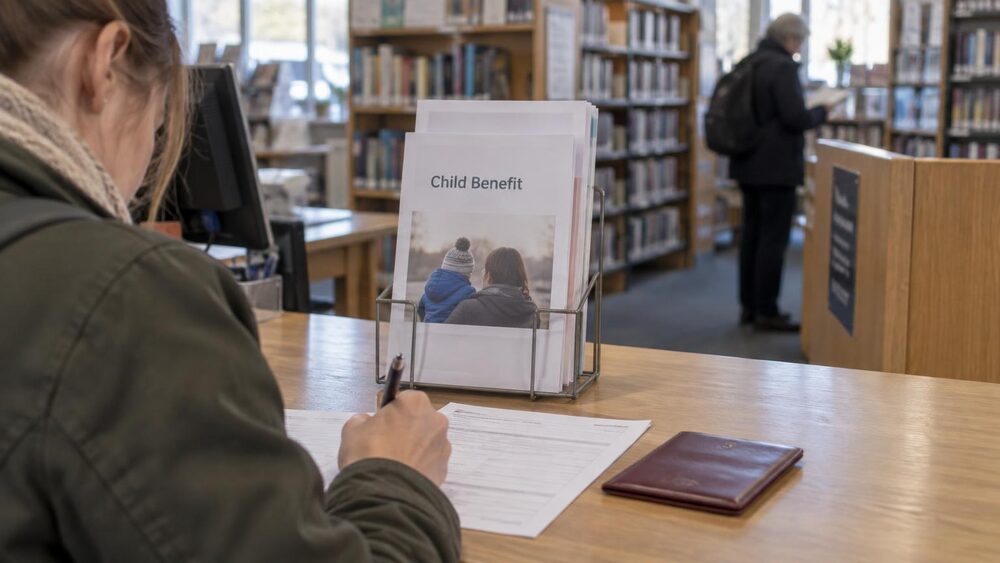
HMRC has extended its fully digital child benefit claims system to all eligible parents, having previously restricted online claims to families with children under six months old. The online system opened to all eligible parents in the week beginning 8 January 2024, according to Which?, which reported the change on 14 January 20241. HMRC began accepting fully digital claims in May 20231.
The department says payments could arrive in as little as three days if an application is successful, compared with up to 16 weeks for the paper form1. The online form continues to exist alongside the paper process1. Claims can be made as soon as 48 hours after a child's birth is registered, and HMRC says claims can be backdated by up to 12 weeks1.
"This week, the online system has been extended for use by all eligible parents."
Anyone responsible for a child under 16, or under 20 and in an approved form of education or training, is eligible for child benefit1. A person is usually considered responsible for a child if they live with them, or pay at least the same amount as child benefit, or the equivalent in kind, towards looking after them1. Only one parent or guardian can claim for a child, so partners need to decide which of them makes the claim1.
Child benefit is not means-tested. In the 2023-24 tax year, the rate is £24 a week for a first or only child, then £15.90 a week for each additional child, with no upper limit1.
| Children | Weekly | Annual |
|---|---|---|
| 1 | £24 | £1,248 |
| 2 | £39.90 | £2,074.80 |
| 3 | £55.80 | £2,901.60 |
| 4 | £71.70 | £3,728.40 |
| 5 | £87.60 | £4,555.20 |
Source: Which?, 14 January 20241
Where a claimant or their partner earns more than £50,000, the high income child benefit charge applies. It is 1% of the child benefit received for every £100 of income between £50,000 and £60,000, and the entire payment must be repaid above £60,0001. The £50,000 threshold has not changed since it was introduced in January 20131. In August 2022, 683,000 families had opted out of payments, 5% more than in August 20211. Claimants over the threshold can opt out of payments while still completing the child benefit form to receive National Insurance credits, which count towards the state pension1.
Why it matters for households
The change affects parents and guardians who are eligible for child benefit but were previously outside the online system, meaning those with children older than six months. For them, the first payment can now arrive in days rather than the up to 16 weeks cited for paper claims1. The amount received is unchanged: rates depend on the number of children, not on household income1. Families where one parent earns above £50,000 remain liable for the high income child benefit charge, and above £60,000 the whole payment is clawed back1. Because the charge is assessed on individual income rather than household income, a family with one earner on £60,000 and a non-earning partner cannot keep the benefit, while two parents each earning £50,000 can1. Claiming can still build National Insurance credits towards the state pension even where payments are opted out of1.
What happens next
Separate childcare support changes are scheduled. From April 2024, two-year-olds become eligible for 15 hours of free childcare a week; from September 2024 this extends to all children aged nine months and over; and from September 2025 the government plans 30 hours a week for all children under school age1. Registration for the April 2024 two-year-old offer is already open on the government website1. Further detail on benefits and on child benefit after 16 is available in the site's guides.
 Turn2usFree benefits calculator and grants search from a charity
 Citizens AdviceFree advice on money, consumer and legal problems in England and Wales
 GOV.UKOfficial information on tax, benefits and government services
 MoneyHelperFree, impartial money and pensions guidance, set up by government