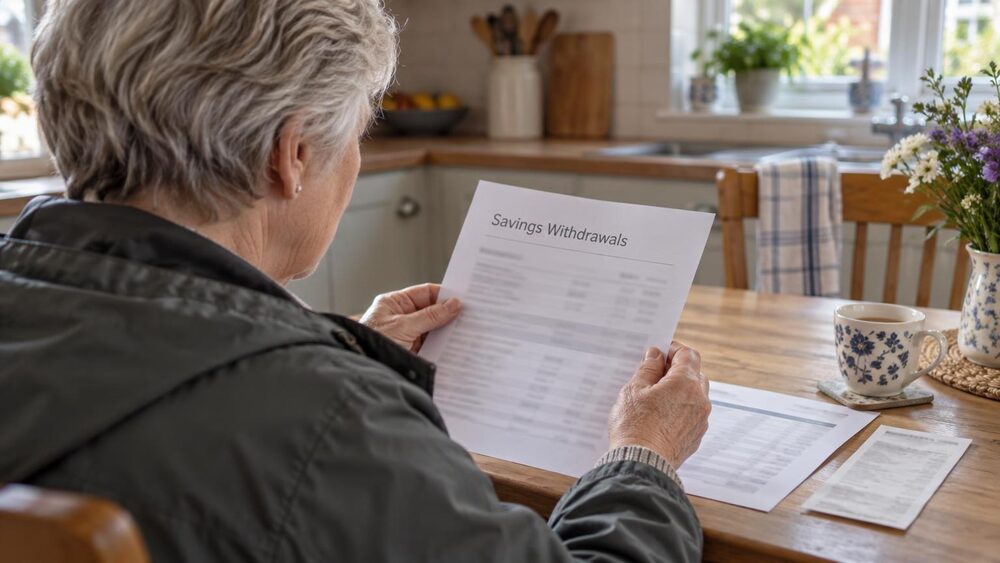
UK households took a net £4.6bn out of savings accounts in May 2023, according to the Bank of England's Money and Credit report. The figure, which excludes savings held in NS&I accounts, is the highest since monthly records started in October 19971. NS&I accounts saw a rise in deposits over the same month1.
The withdrawal came as the cost of living crisis continued to bite, according to Which?, which reported the figures on 7 July 20231. Which? said savers should check the terms of their accounts before withdrawing, because some banks and building societies impose penalties including charges and loss of interest1.
"There was a net withdrawal of £4.6bn during that month, excluding savings held in NS&I accounts which actually saw a boost in deposits."
Which? examined Moneyfacts data on the ten instant-access accounts paying the highest interest rates and found six limited the number of withdrawals a saver could make, or the balance they had to maintain, before penalties applied1. The data was correct as of 6 July 2023 and rates are subject to change1.
| Account | Headline rate (AER) | Withdrawal limits and penalty |
|---|---|---|
| Family Building Society Online Saver | 4.35% | None |
| Coventry Building Society Limited Access Saver | 4.3% | 50-day loss of interest if more than 6 withdrawals made |
| Principality Building Society Online Double Access | 4.3% | Account locked after 2 withdrawals; closure counts as a withdrawal |
| Ford Money Flexible Saver | 4.25% | None |
| Paragon Bank Triple Access Savings Account | 4.25% | Lower rate of 1.5% if more than 3 withdrawals made |
| Yorkshire Building Society Internet Saver Plus | 4.25% | None |
| Skipton Building Society Bonus Saver | 4.22% | None |
| Sainsbury's Bank Defined Access Saver | 4.21% | Lower rate of 1% after 3 withdrawals |
| Chorley Building Society Easy Access Saver | 4.2% | Lower rate of 1.95% after 2 withdrawals |
| Leeds Building Society Limited Issue Online Access Account | 4.2% | Rate drops 0.05% if balance falls below £1,000 |
Source: Moneyfacts, correct as of 6 July 20231.
Penalties vary by account type. Coventry Building Society's instant access Isa pays 4.1% AER but allows six withdrawals a year, after which savers lose 50 days of interest1. A Lifetime Isa (Lisa) carries a 25% penalty on unauthorised withdrawals, so someone with £5,000 who takes money out before age 60, or for a purpose other than a first property purchase, pays £1,2501. HMRC's Annual Savings statistics show unauthorised Lisa withdrawals rose 56% in 2022-23 to 74,650, from 47,850 in 2021-22, amounting to £47.2m1.
Fixed-rate bonds typically impose penalties of between 90 and 365 days of interest for early closure, Which? said, with Halifax's five-year fixed-rate Isa paying 3.6% AER imposing 365 days' interest1. FirstSave's 90-day notice account pays 5% AER but early withdrawals lose 90 days of interest1. Closing HSBC's 5% AER Regular Saver before 12 months reduces the interest paid to the bank's Flexible Saver rate of 1.75%1.
Why it matters for households
The May 2023 figure is a net measure across all savings accounts covered by the Bank of England's data, so it reflects the aggregate behaviour of households rather than any single saver's position. It shows that, in that month, more money left savings accounts than entered them, at a time when the cost of living was rising1.
For anyone holding an instant-access account, the terms attached to the headline rate determine what a withdrawal costs. On the ten highest-paying accounts Which? examined, six carried a limit on penalty-free withdrawals or a minimum balance requirement1. The penalties take different forms: a loss of interest for a set number of days, a lower rate applied once a threshold is crossed, or a lock on the account after a set number of withdrawals1.
Cash Isas generally allow withdrawals without affecting tax benefits, and the Isa allowance was £20,000 tax-free in 2023-24, but some accounts still carry access penalties1. Lifetime Isas carry a 25% charge on unauthorised withdrawals, and HMRC data shows the number of such withdrawals rose in 2022-231.
What happens next
No further Bank of England Money and Credit figures for the months after May 2023 are given in the source. Which? said its account data was correct as of 6 July 2023 and that rates are subject to change1. The Bank of England base rate affects the rates paid on savings accounts, and the source does not report any change to it.

 MoneyHelperFree, impartial money and pensions guidance, set up by government
 FSCSProtects your money if a bank, insurer or investment firm fails
 Financial Ombudsman ServiceFree, independent help when a complaint about a firm is not put right
 Citizens AdviceFree advice on money, consumer and legal problems in England and Wales
 GOV.UKOfficial information on tax, benefits and government services