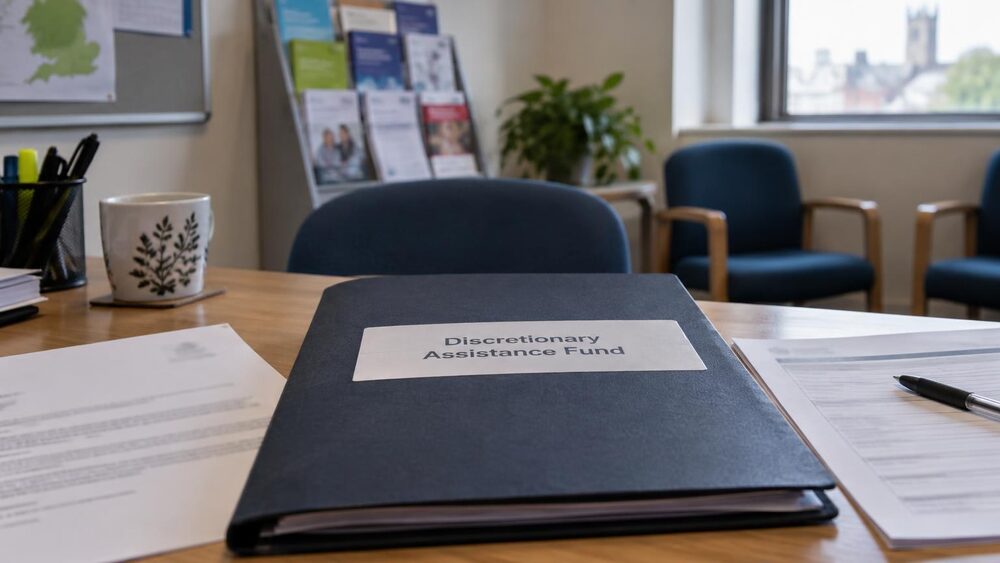
From 1 April 2023 all applicants to the Discretionary Assistance Fund (DAF) in Wales became eligible for three payments in a 12-month rolling period, the Welsh Government has set out in its published guidance on the scheme1. The same change reduces the gap between application dates from 28 days to 7 days for all applicants, and gives an 11% inflationary increase to all Emergency Assistance Payments (EAP) awards1.
The Discretionary Assistance Fund in Wales offers two types of grant. Individual Assistance Payments (IAPs) help people live independently in their home or a property that they are moving into. Emergency Assistance Payments (EAPs) help pay for essential costs, such as food, gas, electricity, clothing or emergency travel1.
The three-payment limit replaces the position since 2020, when people impacted by the pandemic or the loss of the £20 Universal Credit uplift were able to receive five payments1. The Welsh Government states that the three payments will be at a higher value, with the 11% inflationary increase applied to all EAP awards, and that the changes are intended to allow for short and successive use of the fund in a time of crisis or emergency1.
"From 1 April 2023 all applicants will be eligible for 3 payments in a 12-month rolling period. (This will include all EAP awards previously received within the past 12 months)."
The published figures count payments, not people. The Welsh Government states that all DAF figures are a measure of volumes rather than unique users, because up to three successful applications can be made by an individual in a 12-month period1. The figures also refer to approved applications rather than applications that have been paid, so the reported value of payments may differ from the final amount paid to recipients1. The data is designated management information, is supplied by NEC Software Solutions UK from the administrative systems used to process applications, and does not go through formal validation processes, so it is not published as an official statistic1.
Emergency Assistance Payments by age, April to July 2023:
| Month | All ages | 16 to 29 | 30 to 39 | 40 to 49 | 50 to 59 | 60 to 69 | 70 and over |
|---|---|---|---|---|---|---|---|
| April 2023 | 20,356 | 5,492 | 6,737 | 4,151 | 2,576 | 1,111 | 289 |
| May 2023 | 16,845 | 4,874 | 5,593 | 3,384 | 1,894 | 853 | 247 |
| June 2023 | 18,975 | 5,445 | 6,376 | 3,906 | 2,128 | 873 | 247 |
| July 2023 | 16,347 | 4,448 | 5,577 | 3,429 | not given | not given | not given |
Source: StatsWales, Discretionary Assistance Fund by age2. Figures are rounded to the nearest whole number1.
Why it matters for households
The change affects anyone applying to the fund in Wales from 1 April 2023, including people who had already received EAP awards in the previous 12 months, because those earlier awards count towards the three-payment limit1. Households that previously qualified for five payments under the pandemic-era rules now have a maximum of three in a rolling 12-month period1. Against that, each EAP award is 11% higher, and the waiting time between applications falls from 28 days to 7 days, so a household in a short-term crisis can apply again sooner1. The fund sits alongside other support, including Discretionary Housing Payments from your council and, for bereavement, the Bereavement Support Payment. The benefits hub lists further help with living costs.
What happens next
The published dataset covers April 2023 to March 20261. Data for September 2025 to March 2026 was added on 28th May 2026, with data for June 2025 to August 2025 revised; the dataset was first published on 16th October 20251. The next update is expected in May 20261. No further changes to the payment rules have been reported.
Sources3 cited
- Discretionary Assistance Fund by Local authority | StatsWales stats.gov.wales
- Discretionary Assistance Fund by Age | StatsWales stats.gov.wales
- Discretionary Assistance Fund by Age | StatsWales statswales.gov.wales
 Turn2usFree benefits calculator and grants search from a charity
 Citizens AdviceFree advice on money, consumer and legal problems in England and Wales
 GOV.UKOfficial information on tax, benefits and government services
 MoneyHelperFree, impartial money and pensions guidance, set up by government