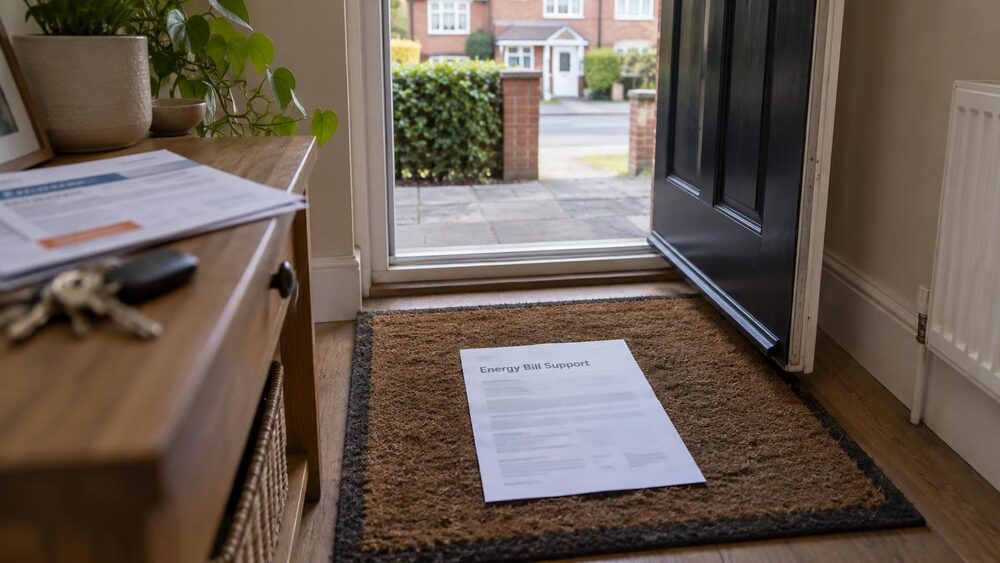
The Energy Bill Support Scheme (EBSS) ended in March 2023, Consumer Scotland has confirmed, describing that month as "the last month in which households received support under the Energy Bill Support Scheme"1. The scheme had given all consumers £400 off their bills between October 2022 and March 2023, paid through a series of monthly payments via direct debit reductions, credits or vouchers2. The Chancellor did not announce a repeat of the scheme for the following winter in the Spring 2023 budget2.
Consumer Scotland's third energy affordability tracker, carried out by YouGov with fieldwork from 2 to 23 March 2023, found that a third of consumers (33%) reported not managing well financially, the same figure as in Winter 2022 and down from 36% in Autumn 20221. In Spring 2023, 27% of consumers said they found it easy to keep up with their energy bills, compared with 31% in Spring 2022, 25% in Autumn 2022 and 24% in Winter 2022-23; 36% said they found it difficult, against 33% in Spring 2022 and 35% in the Autumn and Winter waves1.
The tracker also recorded how households were responding. Half of all consumers (50%) said they were using less energy than in the same period a year earlier, up from 35% in Spring 2022 but down from 61% in Autumn 2022 and 56% in Winter 20221. In Spring 2023, 62% reported rationing their energy use because of financial concerns, against 52% in Spring 2022 and 68% in Autumn and Winter 20221. Some 38% said they could not heat their home to a comfortable level because of financial concerns, down from 43% in Autumn 2022 but above the 31% recorded in Spring 20221.
Difficulty varied by group. In Spring 2023, 52% of those earning under £20,000 and 48% of disabled people said it was difficult to keep up with their energy bills, compared with 29% of non-disabled people; by payment type, 59% of prepayment meter users reported difficulty, against 43% on standard credit and 30% on direct debit1.
"this was also the last month in which households received support under the Energy Bill Support Scheme"
Which? estimated that a median-usage household would pay £135 more in the 2023/24 financial year than in 2022/23, with an annual bill rising from £1,983 to £2,118, because lower prices did not make up for the ending of the £400 EBSS2. It estimated the average household in the lowest 10% of incomes would pay £209 more, since lower usage means a smaller gain from lower prices while the loss of the £400 is the same2. The Spring Budget 2023 kept the Energy Price Guarantee at £2,500 for an average household between April and June, instead of increasing to £3,000, and confirmed prepayment meter prices would match direct debit prices from April 20232. Consumer Scotland noted the new energy price cap level for October to December 2023 would drop to £1,923 per annum for the average household in Great Britain, still above the £1,277 cap in October 2021 to March 20221.
Why it matters for households
The £400 that households received across October 2022 to March 2023 stopped after March 2023, and no replacement scheme for the following winter had been announced1. For households on the lowest incomes, Which? estimated bills £209 higher across 2023/24 than 2022/23, with higher monthly bills in October 2023 to March 20242. Consumer Scotland reported that Ofgem figures showed domestic energy debt and arrears rose from £1.55bn in Q1 2021 to £2.25bn in Q1 20231. Cost of Living payments to households on qualifying benefits continued, but Which? said the targeting mechanism misses many low income consumers who do not receive benefits, citing Citizens Advice and SMF estimates that just 45% of consumers in the poorest 10% of households claim means-tested and disability benefits2. Support for pension-age households in Scotland is covered in our guide to Pension Age, Child and Winter Heating Payments in Scotland, and other help is set out in the benefits hub.
What happens next
The 2022 Autumn Statement committed to having a new "approach to consumer protection", like a social tariff, in place by April 2024, and Which? said progress needed to be made urgently2. Consumer Scotland said it would undertake further work on energy affordability for groups disproportionately affected by high prices and on improving the energy efficiency of Scotland's housing stock1.
Sources2 cited
- Consumer Spotlight: Energy Affordability Tracker 3 | Consumer Scotland consumer.scot
- gm-e86bf5ed-35f4-49a3-9f33-095ec99f084d-household-energy-costs-in-202324.pdf media.product.which.co.uk
 Turn2usFree benefits calculator and grants search from a charity
 Citizens AdviceFree advice on money, consumer and legal problems in England and Wales
 GOV.UKOfficial information on tax, benefits and government services
 MoneyHelperFree, impartial money and pensions guidance, set up by government