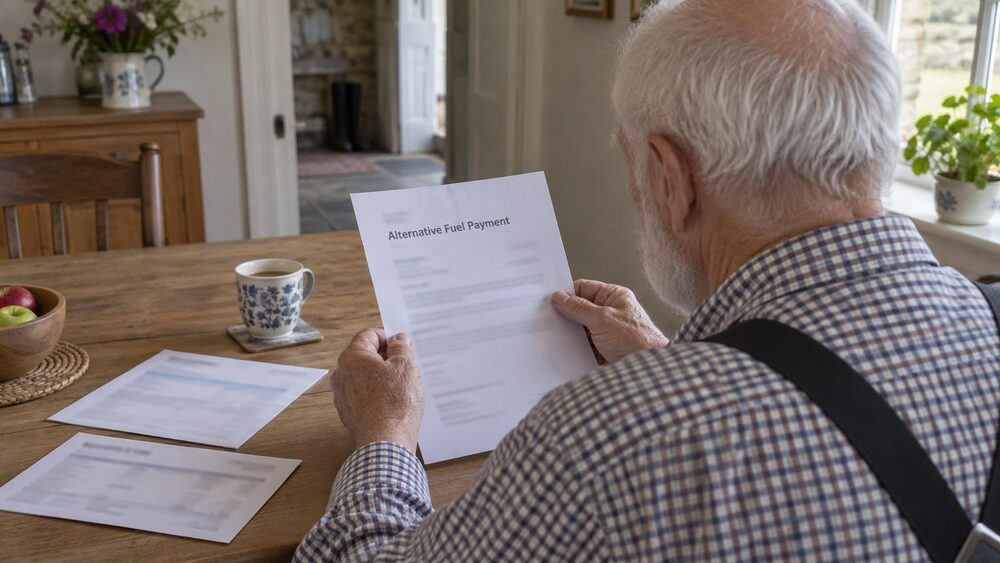
Households in Great Britain that have an electricity supplier but are not connected to the gas grid will have the £200 Alternative Fuel Payment (AFP) paid into their electricity account automatically in February, according to guidance published in December 20221. The payment is for homes in England, Scotland and Wales that use alternative fuels such as heating oil or biomass1.
The AFP is worth £200 and is paid regardless of the type of fuel a household uses to heat its home1. Where a household has an electricity supplier but does not use the gas grid, the payment is made into the electricity account automatically in February1. Households without an electricity supplier must apply through a Gov.uk online portal, which was due to launch in January, with a phone line also opening that month for people unable to use the internet1.
Northern Ireland has a separate arrangement. Households there receive a one-off payment of £600, which started to be paid in January 20231. This is made up of £400 under the Energy Bills Support Scheme Northern Ireland (EBSS NI) and £200 under the AFP1. Unlike the rest of the UK, which has a different energy market, the payment is made all in one go, to make sure people feel the full benefit of the scheme as soon as possible1. It is paid by the electricity supplier directly into a bank account where bills are paid by direct debit; households with a prepayment meter are sent a voucher instead1.
A separate scheme covers households that do not get their energy directly from a supplier. The EBSS Alternative Funding scheme gives £400 to an estimated 900,000 remaining households1. This includes tenants in certain private and social rented homes, residents of houseboats and caravans, and people living in care homes and park homes1. Applications are made through the same online portal, with a customer helpline for those without online access1. Once the form is completed and details checked, payments are made directly via the local authority, and the exact date a household receives the payment depends on when the application is made and when the relevant local authority can process it1. Households already eligible for support through the main Energy Bills Support Scheme cannot apply for EBSS Alternative Funding1.
The then secretary of state for Northern Ireland, Chris Heaton-Harris, said:
"I am acutely aware of the uncertainty and frustration that people across Northern Ireland have felt about their energy bill support. Families can start the new year knowing that they will receive the full support from January."
Why it matters for households
For off-gas-grid households in England, Scotland and Wales, the £200 AFP arrives as a credit to the electricity account rather than as a cash payment, so it reduces what is owed on electricity rather than being paid out separately1. Households with no electricity supplier at all are not paid automatically and must apply, and the timing of any payment depends on when the application is made and how quickly the local authority processes it1. Households that already receive support through the main Energy Bills Support Scheme are excluded from the £400 EBSS Alternative Funding1.
In Northern Ireland, the £600 is paid as a single amount rather than in instalments, and households on prepayment meters receive a voucher rather than a bank transfer1.
What happens next
The AFP was due to be paid automatically into electricity accounts in February for households with a supplier but no gas grid connection1. The Gov.uk portal and phone line for households without an electricity supplier were due to open in January1. Northern Ireland's £600 payments began in January 20231. No further dates for the AFP or EBSS Alternative Funding have been reported1.
More detail on help with energy bills and other benefits is available.
 Turn2usFree benefits calculator and grants search from a charity
 Citizens AdviceFree advice on money, consumer and legal problems in England and Wales
 GOV.UKOfficial information on tax, benefits and government services
 MoneyHelperFree, impartial money and pensions guidance, set up by government