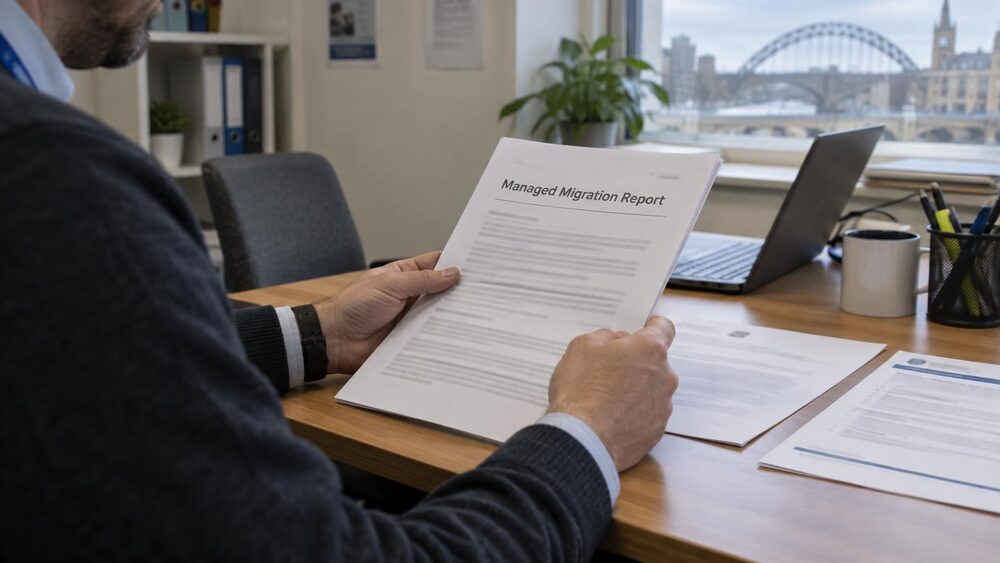
The Social Security Advisory Committee (SSAC) published a formal reference report on the Universal Credit (UC) managed migration regulations, setting out 11 recommendations. The report focused on the oversight and governance improvements needed to safeguard claimants if the Department for Work and Pensions (DWP) decided to press on without reversing its proposed changes to managed migration1.
Managed migration moves claimants of legacy benefits on to Universal Credit without a change of circumstances1. In 2019 the then Work and Pensions Secretary Amber Rudd agreed that a maximum of 10,000 people could go through a managed migration pilot, with an evaluation report produced showing it was not having an adverse effect before Parliament would be asked to approve nationwide roll-out1. In late March 2022, SSAC published minutes of its December 2021 meeting and its subsequent correspondence with DWP ministers over the Department's plans to drop the 10,000-case limit and press ahead with managed migration through a "Discovery Phase"1. The Secretary of State, Therese Coffey, said her Department would resume the managed migration process and complete the move to UC by 20241. DWP will begin the move initially with 500 claimants in Bolton and Medway1.
SSAC's chair, Dr Stephen Brien, said:
"A process to move around 1.7 million households, many with complex lives, onto Universal Credit from legacy benefits creates a significant risk for both those who are reliant on these benefits and also for DWP in delivering it. For the public to have confidence in this process and to minimise risk further consideration needs to be given to establishing appropriate independent oversight and scrutiny of the programme as it moves forward."
The report's recommendations are mostly operational, with a constant theme of increasing the transparency of the UC Programme's approach and introducing external involvement so it is not "setting and marking its own homework"1. A key recommendation is that the Senior Responsible Owner should "present the scaling-up proposals to the Work & Pensions Select Committee for scrutiny and assurance before proceeding"1.
In May 2022 the Work and Pensions Select Committee held a one-off session on UC managed migration1. On the three-month migration notice period, Ms Coffey said: "For the first groups of claimants in this initial phase of discovery, I have decided the department will not terminate any benefits if the claimant fails to claim within the three-month period given. Instead, if these claimants have failed to engage with the department, DWP will make a minimum of a one-month extension to the deadline outlined in their notice"1. DWP states it will ensure the claimant's entitlement on UC "at the point of managed transition" is not below that of legacy benefits, though transitional protection only lasts for three months at the point of making a claim1. Around 900,000 of the 1.7 million who will be moved between May 2022 and December 2024 will have their income eroded over time1.
Why it matters for households
Around 1.7 million households on legacy benefits are in line for managed migration, with an average of nearly 3,000 legacy benefit claimants in each constituency1. The move affects people claiming benefits such as Employment and Support Allowance and other legacy benefits, who will be sent a migration notice and asked to claim Universal Credit. The three-month notice period is the deadline for claiming, and DWP has said it will not terminate benefits for the first groups in the initial phase if a claimant fails to claim within that period, instead making a minimum one-month extension1. Transitional protection, which is intended to stop a claimant's UC entitlement falling below their legacy entitlement at the point of transition, lasts for three months at the point of making a claim1. Around 900,000 of the 1.7 million people moved between May 2022 and December 2024 are expected to have their income eroded over time1. The report's recommendations concern oversight and governance rather than the rates or rules of UC itself.
What happens next
The report makes 11 recommendations, including that the Senior Responsible Owner should present scaling-up proposals to the Work and Pensions Select Committee for scrutiny and assurance before proceeding1. The Department welcomed the Committee's focus on the regulation removing the 10,000 limit, and noted the committee had not made any recommendations regarding the draft regulations, so no amendment was made to them1. DWP will begin the move initially with 500 claimants in Bolton and Medway1.

 Turn2usFree benefits calculator and grants search from a charity
 Citizens AdviceFree advice on money, consumer and legal problems in England and Wales
 GOV.UKOfficial information on tax, benefits and government services
 MoneyHelperFree, impartial money and pensions guidance, set up by government