
Support for the initial Universal Credit claim was no longer provided face to face from April 2022, according to a TUC consultation response published on 24 May 20231. The same document states that the Department for Work and Pensions announced in March 2022 that it planned to close 41 sites, putting thousands of jobs at risk1.
The TUC submission to the Work and Pensions Select Committee inquiry into the adequacy of benefit levels says that while support is available for the initial claim, claimants need ongoing support1.
"While support is available for the initial claim (though not face to face from April 2022), claimants need ongoing support."
The response sets out the TUC's view of the wider benefit system. It says the basic rate of Universal Credit is worth around a sixth of average weekly pay, and that the standard out of work benefit payment for over 25s without housing costs is £85 a week, which it says is £40 per month lower in real terms than in 20101. It states that under Universal Credit claimants must wait at least five weeks for their first payment, and that the basic level of support can be reduced by deductions of up to 25 per cent of the standard allowance1. Deductions reduce Universal Credit awards by £61 a month on average, and almost two in five claimants have a deduction, according to the document1.
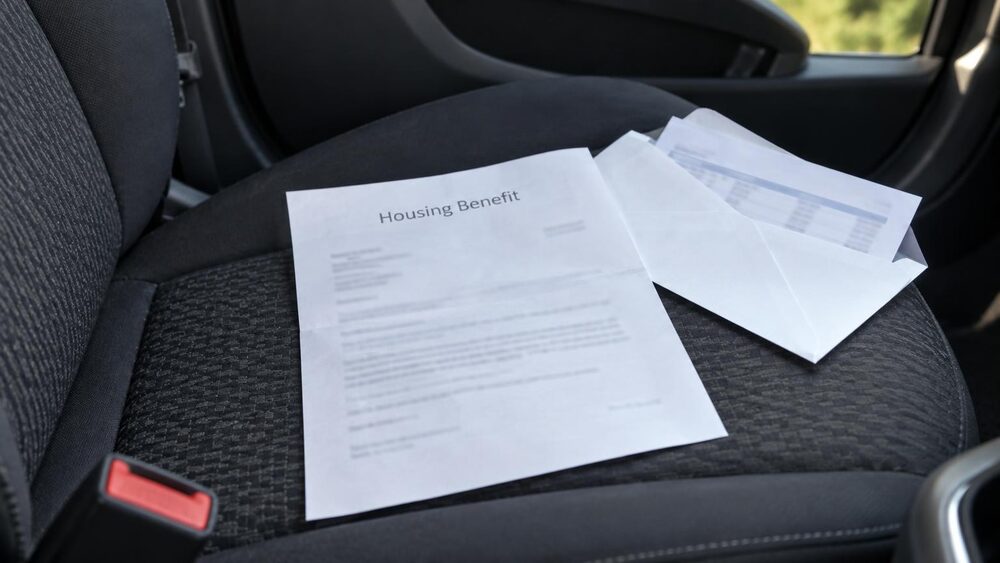
On housing, the TUC says housing benefit has remained frozen since 2020 while rents have risen, and that for a family renting a modest two or three bedroom home at the 30th percentile of local rents, the housing benefit received is inadequate in 91 per cent of areas in England1. It cites Ministry of Justice data showing that, in the last quarter of 2022 compared with a year earlier, landlord possession claims rose from 14,436 to 20,460, orders from 6,865 to 16,158, warrants from 4,285 to 8,717 and repossessions from 2,729 to 5,4091.
The submission also cites Households Below Average Income data for 2021/22 showing relative poverty rose by one million to 14.4 million, or 22 per cent of the population, and child poverty rose by over 300,000 to 4.2 million, or 29 per cent of all children1. It says food banks in the Trussell Trust UK network distributed almost 3 million emergency food parcels in 2022/23, more than ever before1. Using the Joseph Rowntree Foundation's Minimum Income Standard, it says a couple with two children on out-of-work benefits have just over half, 52 per cent, of what they need for a minimum standard of living1.
The TUC's recommendations include raising the basic level of Universal Credit and legacy benefits to at least 80 per cent of the national living wage, ending the five-week wait by converting emergency payment loans to grants, removing the benefit cap and the two-child limit, and increasing sick pay from £99.35 a week to the equivalent of a week's pay at the real living wage1.
Why it matters for households
The change described affects people making a new claim for Universal Credit from April 2022, who no longer receive face-to-face help with that initial claim1. The TUC's position is that support is still needed after the claim is made, not only at the start1.
For households already on Universal Credit, the figures cited describe the amounts involved. The standard allowance for a single person over 25 without housing costs is £85 a week, and the TUC says its real value is £40 a month lower than in 20101. Deductions, which the TUC says average £61 a month and apply to almost two in five claimants, reduce awards and are most commonly used to repay the loan taken to cover the five-week wait for a first payment1. The five-week wait itself is a feature of the claim process, and the TUC says there is no assessment of whether a claimant can afford the repayment1.
Housing support is a separate pressure: the TUC says frozen housing benefit rates leave a shortfall for a family renting a modest two or three bedroom home at the 30th percentile of local rents in 91 per cent of areas in England1. Details of how the housing element is calculated and how advances are repaid are set out in the guide pages.
What happens next
The document is a consultation response to the Work and Pensions Select Committee inquiry into the adequacy of benefit levels, published on 24 May 20231. No decision or timetable arising from the inquiry is reported in the document. The DWP's March 2022 announcement of planned site closures, cited by the TUC, is the only dated operational step given1.
Sources1 cited
- Benefit levels in the UK | TUC tuc.org.uk
 Turn2usFree benefits calculator and grants search from a charity
 Citizens AdviceFree advice on money, consumer and legal problems in England and Wales
 GOV.UKOfficial information on tax, benefits and government services
 MoneyHelperFree, impartial money and pensions guidance, set up by government