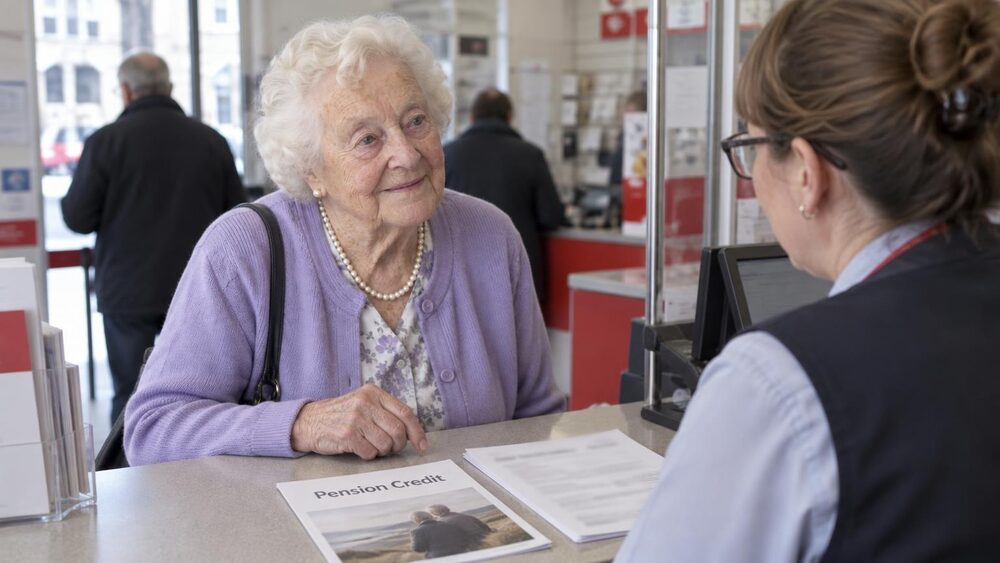
The Department for Work and Pensions (DWP) launched an ongoing campaign from April 2022 consisting of increased advertising to make people more aware that they could be entitled to Pension Credit1. A separate DWP publication describes the same activity as a continuous campaign from April 2022 which saw increased advertising for the same purpose2.
"From April 2022, DWP launched an ongoing campaign which consists of increased advertising to make people more aware of the possibility that they could be entitled to PC ."
The campaign ran alongside a period in which measured take-up of Pension Credit moved in both directions. In the financial year ending (FYE) 2023, 65% of those entitled to Pension Credit claimed it, up from 63% in FYE 2022, and 78% of the total amount that could have been claimed was claimed, up from 73%2. In FYE 2024, 62% of those entitled claimed it, a decrease from 65% in FYE 2023 that the department says is not statistically significant, while expenditure take-up fell to 71% from 78%, a difference it describes as statistically significant1.
Non-take-up rose over the same period. In FYE 2023, up to 760,000 families entitled to Pension Credit did not claim, with up to £1.5 billion unclaimed, or around £1,900 a year on average for each family that did not claim2. In FYE 2024, up to 910,000 families did not claim, up to £2.5 billion went unclaimed, and the average was around £2,600 a year1.
| Measure | FYE 2023 | FYE 2024 |
|---|---|---|
| Claimed Pension Credit (caseload) | 65%2 | 62%1 |
| Amount claimed (expenditure) | 78%2 | 71%1 |
| Families entitled but not claiming | up to 760,0002 | up to 910,0001 |
| Amount unclaimed | up to £1.5 billion2 | up to £2.5 billion1 |
| Average unclaimed per family | around £1,900 a year2 | around £2,600 a year1 |
The FYE 2024 figures incorporate improved linking of administrative data to the Family Resources Survey to better identify those in receipt of Pension Credit or Housing Benefit, and the department notes that users should be mindful of differences in data collection approaches when interpreting changes over recent years1. Take-up rates also vary by household type: in FYE 2024 the caseload take-up rate was 67% for single males, 64% for single females and 48% for couples, down from 59% for couples in FYE 20231. For those aged under 75 it fell by 3 percentage points, from 68% to 65%, and for those aged 75 or over by 4 percentage points, from 64% to 60%1.
Why it matters for households
Pension Credit is an income-related benefit, meaning a claimant's income and capital are considered when deciding entitlement1. The figures cover Great Britain and relate to the pensioner population, with State Pension age at 66 for both men and women in FYE 20241. Since May 2019, both partners in a couple have had to reach State Pension age for a successful claim to income-related pension age benefits, which affects mixed age couples1. Savings Credit was abolished for new pensioners from April 2016, and the department no longer publishes Savings Credit breakdowns because the remaining cases are too few to estimate with confidence1.
The estimates describe how many entitled families claimed and how much they received, not the reasons for non-take-up. The department states that take-up may be affected by broad factors such as awareness of the benefit or the application procedure, awareness of entitlement, or perceived stigma, and that it does not have data in its modelling to explain non-take-up1. Take-up statistics are not available below Great Britain level because survey sample sizes for entitled non-recipients are too small1.
What happens next
The campaign is described as ongoing from April 2022, with no end date given1. The next set of take-up estimates, for FYE 2025, has not been reported.
 Turn2usFree benefits calculator and grants search from a charity
 Citizens AdviceFree advice on money, consumer and legal problems in England and Wales
 GOV.UKOfficial information on tax, benefits and government services
 MoneyHelperFree, impartial money and pensions guidance, set up by government