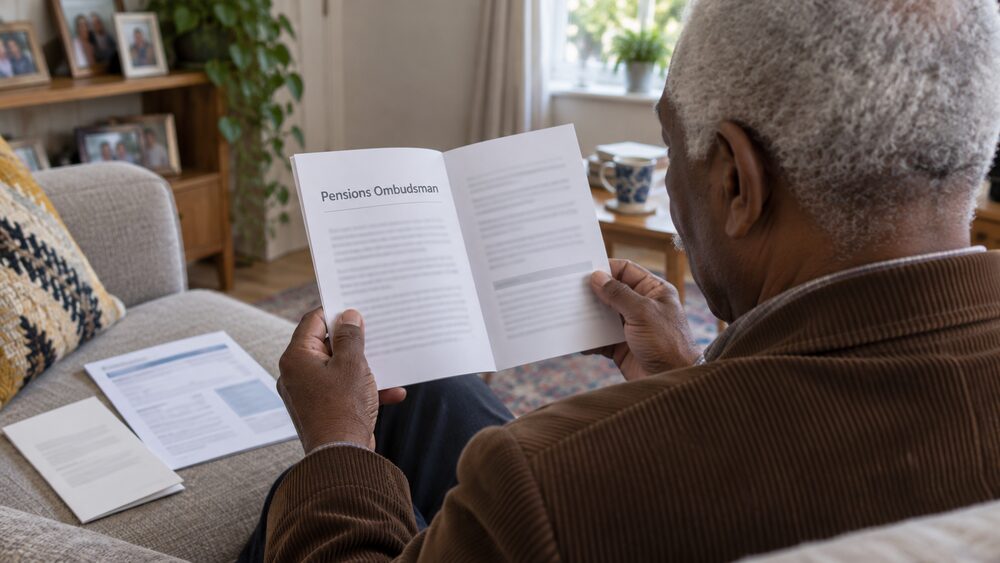
If your complaint is about a pension, the first question is which ombudsman to use. The Financial Ombudsman Service handles complaints about advice to take out a personal pension, to transfer, to buy an annuity or to go into drawdown, and about investments in SIPP, EPP or SSAS plans. It also handles the administration of a personal pension scheme, including self-invested pensions and group personal pensions1.
The Pensions Ombudsman can look at complaints about the administration of personal and occupational pension schemes3. Where a complaint is about the administration of a personal pension scheme, either the Financial Ombudsman Service or The Pensions Ombudsman could help you1.
The dividing line is usually the type of firm and the nature of the problem. Where the firm is not on the FCA Register, the complaint goes to the Pensions Ombudsman1. Where it is unclear which scheme applies, a complaint can be brought to the Financial Ombudsman Service, which will say if it thinks the Pensions Ombudsman should deal with it4.
What the Financial Ombudsman Service covers
The Financial Ombudsman Service provides dispute resolution between banks and customers, and considers the individual circumstances of a complaint1. In relation to pensions, it can consider matters which concern advice relating to the sale or marketing of individual pension arrangements9.
Its pension scope is set out in more detail. It covers advice to take out a personal pension, including group personal pensions, stakeholder pensions and self-invested personal pensions; advice to transfer from a defined benefit occupational pension scheme to a personal or other defined contribution pension scheme; advice to take out an annuity or go into drawdown; advice on investments in SIPP, EPP or SSAS plans; advice about management of a personal pension portfolio; advice on taking out an annuity or section 32 buy-out policies in the individual consumer's name; and administration of a personal pension scheme including SIPPs, group personal pensions and annuities in payment1.
It also handles complaints about the administration of personal pension schemes including self-invested pensions and group personal pensions1. Where investments were unsuitable and the pension pot is smaller as a result, it will usually tell the IFA, pensions adviser or provider to make up the difference2.
The service covers a wide range of other financial products too: banking and payment services including current accounts, savings accounts, direct debits, money transfers, electronic payment platforms, cheques and banker's drafts10; consumer credit complaints about payday loans, the affordability of lending, and the quality of goods bought or hired with credit11; and investments12.
Complain to the firm first: the eight-week rule
A complaint reaches the Financial Ombudsman Service only after a formal complaint has been made to the company involved. If no final response letter arrives within eight weeks, or the response is unsatisfactory, the complaint can then be brought to the ombudsman1.
A firm has a maximum of eight weeks to try to resolve a complaint6. For most types of complaint, the firm needs to give you its final response within eight weeks14. Financial businesses should look into things and reply within 8 weeks15.
Once you have a final response, you need to make a complaint to the ombudsman within 6 months from the date on your final response7. If you are still unhappy or the firm has not responded in time, you have six months to take your complaint to the free Financial Ombudsman Service16.
Who can bring a complaint to the Financial Ombudsman
The Financial Ombudsman Service can usually help individual or joint consumers of a financial business that provides services or products in the UK, regardless of nationality or where they live8. It can help if you have made a complaint to the financial business and you are not happy with its answer17.
Where the firm is not on the FCA Register, the complaint goes to the Pensions Ombudsman1. Where it is unclear which scheme applies, a complaint can be brought to the Financial Ombudsman Service, which will say if it thinks the Pensions Ombudsman should deal with it4.
The Pensions Ombudsman may investigate and determine any complaint in relation to the administration of a scheme, involving an authorised complainant and the administrator of the scheme18. It can look at complaints about the administration of personal and occupational pension schemes3.
Other consumer complaints that reach the Financial Ombudsman Service include credit union complaints, where you can take your complaint to the free service if you are unhappy with the final response or the timeframe has passed19; and complaints against a currently trading funeral plan provider or intermediary, which may be referred to the service after first complaining to the provider20.
Making a complaint is free and you do not need a representative
Bringing a complaint to the Financial Ombudsman Service is straightforward and will not cost you anything14. The service is free and easy to use13. You do not need a lawyer or anyone else to represent you8.
You do not need to pay anyone to represent you, for example a lawyer or claims management company, but you can ask a family member, friend or someone else to help22. Unlike a court, you generally do not need anyone to represent you, and the service can talk to a member of your family if you prefer23.
To complain, you fill in the complaint form. If you are considering using AI to help you complete the form, the service publishes guidelines on using AI before you start13. Those guidelines say to avoid entering personal information that you would not want shared, such as health or banking information; to only use AI to help you organise information or put it clearly; and to check the resulting text carefully7.
How an investigator and an ombudsman reach a decision
When the Financial Ombudsman Service has finished investigating, it will tell you whether it thinks the business treated you fairly or not, and it will explain how it reached its decision12. It considers facts and evidence from both the business and the customer, then sets out its findings explaining the decision and what needs to be done to put things right11.
If one or both sides disagree with the investigator's view, they can ask for the complaint to be referred to one of the ombudsmen, who takes a fresh look including any new evidence23. If an ombudsman's decision on what has happened differs from the investigator's, they will send a provisional decision explaining why, before a final decision is issued23.
In around 1 in 10 cases, either the firm or the consumer asks for a review and final decision by an ombudsman24. The decision is based on relevant law and regulations, the regulator's rules, guidance and standards, and industry codes of practice and, where appropriate, good industry practice13.
The time it takes to investigate a complaint depends on what it is about, how complex it is and how quickly information can be obtained1. In the reporting period from 9 July 2024 to 8 July 2025, the average time from receipt of all the information needed to start investigating until an initial assessment was issued was 60.81 days25.
Compensation: awards up to £455,000 plus interest
The Financial Ombudsman Service can award up to £455,000 for complaints referred on or after 1 April 2026 about acts or omissions that occurred on or after 1 April 20195. The limit has risen over time: £445,000 for complaints referred on or after 1 April 2025, £430,000 for complaints referred on or after 1 April 2024, £415,000 for complaints referred between 1 April 2023 and 31 March 2024, £375,000 for complaints referred between 1 April 2022 and 31 March 2023, and £355,000 for complaints referred between 1 April 2020 and 31 March 20225.
The service can recommend that a business pays more if it thinks that is fair, but the business does not have to accept that recommendation5. If you were awarded interest for being deprived of money because the business delayed payment, that interest payment can be awarded on top of the limit5.
Interest works differently depending on when the complaint was referred. Before 1 January 2026, the service typically asked financial businesses to use a rate of interest at 8% simple a year. From 1 January 2026, it typically asks them to calculate this using a time-weighted average of the Bank of England base rate plus one percentage point5. The interest rate for late payment is usually 8% simple a year, and the deadline for payment is usually 28 calendar days from the date the service informs the financial business that you have accepted the final decision5.
Where a complaint is upheld, the service will tell the business to put you back where you would be if it had not made a mistake, and possibly make an award for distress and inconvenience10. Compensation for distress and inconvenience can be up to £1,500 in some cases27, and up to £300 in others15.
For group schemes, any award will go to the employer as the policyholder28. Where the calculation shows you have suffered a financial loss, the redress can be paid directly to you or to your private pension29.
A final decision you accept is legally binding
The Financial Ombudsman Service's final decisions are legally binding if accepted by the complainant30. They are legally binding if accepted by the consumer26. Once accepted, the decision and any redress awarded become binding on the firm31. Both the consumer and the firm are bound by the decision; otherwise the firm is not bound but the consumer remains free to take court proceedings32.
An ombudsman's final decision is legally binding if you accept it, and enforceable in court33. Final determinations, once accepted by the complainant, are binding on both the complainant and the respondent firm34.
The Pensions Ombudsman's decision is final and binding on all the parties to the complaint or dispute35. An Ombudsman Determination is a final, binding decision, enforceable in court3. Its determinations are legally binding on all the parties and are enforceable in court36.
If either side is unhappy with the decision, they cannot appeal an ombudsman's final decision to another ombudsman23. Consumers can still go to court if they do not want to accept the Ombudsman's decision37. You can also still refer your case to the Financial Ombudsman, which may be able to consider taking action on your behalf38.
Where to get free help
MoneyHelper provides free, impartial guidance on money matters, including basic bank accounts16 and credit union current accounts19. The Pensions Ombudsman publishes guidance on where to go for help with your pension complaint39, and signposts consumers to its service40.
The Pensions Regulator publishes guidance on internal dispute resolution procedures for pension schemes35. The Financial Ombudsman Service offers a Business Support Hub for businesses and consumer advisers on how a complaint might be looked at and guidance on rules11.
If you are complaining about a firm that is not on the FCA Register, the Financial Ombudsman Service advises using the Financial Conduct Authority's Firm Checker to confirm the firm is authorised and help avoid scams10.
Sources40 cited
- Pensions and annuities Financial Ombudsman Service
- Personal pensions Financial Ombudsman Service
- What we can and cannot do The Pensions Ombudsman
- Pensions organised by employers Financial Ombudsman Service
- Compensation Financial Ombudsman Service
- Ombudsman news issue 25 Financial Ombudsman Service
- How to complain Financial Ombudsman Service
- What to expect Financial Ombudsman Service
- Consultation on pensions transfers Financial Ombudsman Service
- Consumer credit Financial Ombudsman Service
- Quarterly complaints data Q1 2026-27 Financial Ombudsman Service
- Investments Financial Ombudsman Service
- Individual savings accounts (ISAs) Financial Ombudsman Service
- Unaffordable lending Financial Ombudsman Service
- Misrepresentation and non-disclosure Financial Ombudsman Service
- Millions of car finance customers to receive payouts as FCA goes ahead with compensation scheme Financial Conduct Authority
- Who we can help: consumers video transcript Financial Ombudsman Service
- Credit union current accounts MoneyHelper
- Mis-selling pensions Scottish Public Pensions Agency
- The Contingent Reimbursement Model (CRM) Code Payment Systems Regulator
- Logbook loans Financial Ombudsman Service
- Consumer leaflet easy read Financial Ombudsman Service
- How we make decisions Financial Ombudsman Service
- Ombudsman news issue 42 Financial Ombudsman Service
- Alternative Dispute Resolution annual activity report 2024-2025 Financial Ombudsman Service
- Guidance on our new interest awards Financial Ombudsman Service
- Subsidence and types of ground movement Financial Ombudsman Service
- Income protection insurance Financial Ombudsman Service
- British Steel Pension Scheme Financial Ombudsman Service
- Alternative Dispute Resolution annual activity report 2023-2024 Financial Ombudsman Service
- Response to HM Treasury consultation on reforming the Consumer Credit Act 1974 Financial Ombudsman Service
- Ombudsman news issue 42 (PDF) Financial Ombudsman Service
- Where to go for help with your pension complaint The Pensions Ombudsman
- Funeral plans Financial Services Compensation Scheme
- Occupational and Personal Pension Schemes (Northern Ireland) Regulations 1996 legislation.gov.uk
- Basic bank accounts MoneyHelper
- ADR Financial Ombudsman Service
- Review of the Financial Ombudsman Service consultation HM Treasury
- Pensions Ombudsman research briefing House of Commons Library
- Pensions law: internal dispute resolution procedure The Pensions Regulator



 Citizens AdviceFree advice on money, consumer and legal problems in England and Wales
 Financial Ombudsman ServiceFree, independent help when a complaint about a firm is not put right
 MoneyHelperFree, impartial money and pensions guidance, set up by government
 Citizens Advice ScotlandFree advice across Scotland