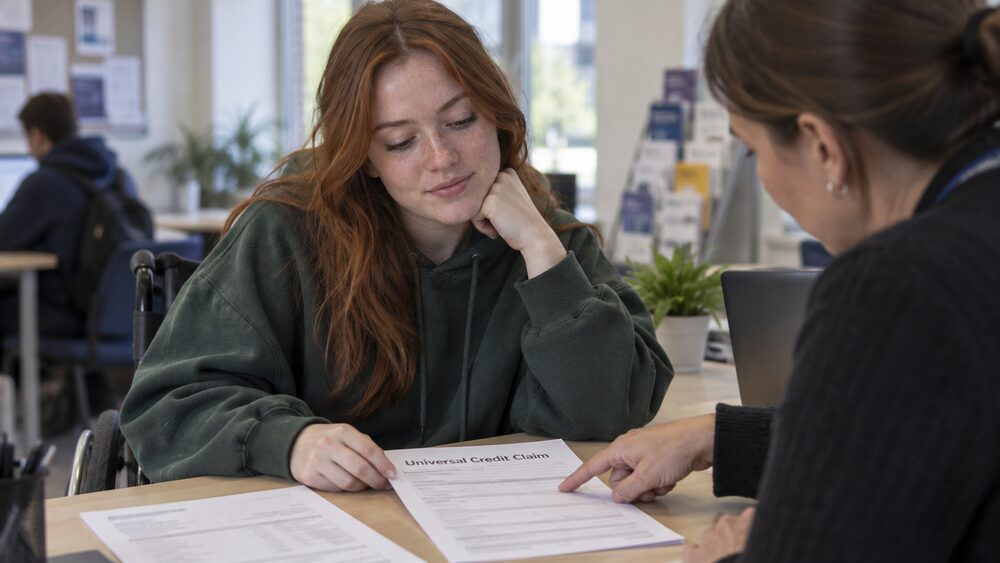
Most full-time students cannot claim Universal Credit. The rule is that you cannot usually get Universal Credit if you are studying full-time, and most people who study full-time at college or university are not normally eligible1. Part-time study is different: if you are studying part-time, you may be able to get Universal Credit as long as you can meet the work-related requirements that apply to you1.
Most full-time students cannot claim Universal Credit. The rule is that you cannot usually get Universal Credit if you are studying full-time, and most people who study full-time at college or university are not normally eligible1. Part-time study is different: if you are studying part-time, you may be able to get Universal Credit as long as you can meet the work-related requirements that apply to you1.
There are exceptions for full-time students, and they are narrow. You can claim if you receive Personal Independence Payment, your Work Capability Assessment says you have a limited capability for work, and you had limited capability for work before you started your studies3. Other routes include being responsible for a child, or living with a partner who is eligible for Universal Credit4. If you are on a course of full-time advanced education, you may be able to claim if you get disability benefits such as Personal Independence Payment or Adult Disability Payment and were found to have limited capability for work before the course started6.
Where a student can claim, the amount is worked out differently from a standard award. Student income, including Maintenance Loans, bursaries and grants, is taken into account and can reduce what you get4. Disabled Students' Allowance is the exception: it is ignored entirely4. Savings above £16,000 normally end entitlement, and capital above £6,000 reduces the award7.
Most full-time students cannot claim Universal Credit, but some can
The starting point is a straightforward exclusion. Full-time students are usually not eligible for Universal Credit2. The official guidance is that you cannot usually get Universal Credit if you are studying full-time, but there are some exceptions1. Independent guidance puts it the same way: most people who study full-time at college or university are not normally eligible4.
The exceptions fall into a few groups. The first is disability. You can claim as a full-time student if you receive Personal Independence Payment, your Work Capability Assessment says you have a limited capability for work, and you had limited capability for work before you started your studies3. The same route appears in guidance for students in student accommodation5. For students on a course of full-time advanced education, you may be able to claim if you are entitled to disability benefits including Personal Independence Payment, Adult Disability Payment, Disability Living Allowance, Child Disability Payment, Attendance Allowance or Pension Age Disability Payment, and you were found to have limited capability for work before the course started6.
The second group is parents and couples. Students are normally excluded, with some exceptions, for example if you or your partner have a child, or you are on certain disability benefits12. You may also be able to claim if you live with your partner and they are claiming Universal Credit13, or if you are part of a couple and your partner is eligible for Universal Credit14.
A separate condition applies to some of these routes: you must not be eligible for a student loan, grant or bursary15. If you can get student finance, that support is expected to come first.
Part-time students are treated differently. You could get Universal Credit if you are studying part-time2, and the official position is that part-time study is acceptable as long as you can meet the work-related requirements that apply to you1. In practice that means attending appointments and doing what your claimant commitment sets out.
How your Maintenance Loan affects a Universal Credit award
Student income does affect Universal Credit16. It includes student maintenance loans, bursaries and grants4. Maintenance loans intended to cover your living costs will be deducted from your Universal Credit payment13. That is a deduction, not a taper: the loan is treated as income for the assessment period and taken off the award.
There is a rule that catches people who do not take the loan they are offered. If you could get a student loan for maintenance but do not claim it, your Universal Credit will be calculated as if you had been given the loan17. Turning down student finance does not increase the Universal Credit award.
Some income is left out. No student income will be taken off your Universal Credit if the assessment period covers the first day of the summer holidays, if you are on summer holiday for the whole of an assessment period, or if your course ends during the assessment period14. Those windows matter because a deduction in one month can disappear in the next.
Other payments are treated differently again. Any Child Maintenance Service payments you receive will not affect your Universal Credit payments18. Disabled Students' Allowance does not affect Universal Credit either4.
Savings, earnings and the £6,000 and £16,000 limits
Universal Credit is means-tested on capital as well as income, and the capital rules apply to students in the same way as anyone else. Most people are not able to claim Universal Credit if they, or their partner, have savings over £16,0009. To claim, you must usually have no more than £16,000 in money, savings and investments as a single claimant or living with a partner7. Savings above £16,000 end entitlement to Universal Credit20, and having savings below £16,000 is one of the standard conditions21.
Below that ceiling, capital still counts. The lower limit is £6,000 for Universal Credit8. Capital above £6,000 reduces the award, and the reduction continues until capital falls to £6,000 or less. The exact monthly reduction depends on how much capital is above the limit, and official guidance gives worked examples that do not agree with each other: one says capital of £6,300 reduces Universal Credit by £8.70 a month until capital is £6,300 or less, while another says capital of £6,250 or less reduces Universal Credit by £4.35 a month until capital is £6,000 or less. Treat the direction of the rule as settled and the precise figure as something to check on your own award.
Earnings are treated more generously than student income. With Universal Credit you will keep 45p of each £1.00 you earn until your earnings are too high to get Universal Credit22. That is the earnings taper, and it applies to wages from work rather than to a Maintenance Loan.
Disabled Students' Allowance: up to £27,783 a year
Disabled Students' Allowance is separate from Universal Credit and is not affected by it. Undergraduate and postgraduate students can get up to £27,783 per year for support10. In England, a single allowance of up to £27,783 per academic year is available to full-time and part-time undergraduate or postgraduate students16, and a maximum allowance of up to £27,783 per year, excluding travel, is available to full-time and part-time undergraduates23.
The allowance is higher in Wales. In Wales, full-time and part-time undergraduate or postgraduate students can get up to £34,671 per academic year for support16. There is a single allowance of up to £34,671, excluding travel, available to undergraduate and postgraduate students24, and the same single allowance of up to £34,671, excluding travel, applies to full-time or part-time courses in the 2026/27 academic year25.
Two features matter for anyone also claiming benefits. First, Disabled Students' Allowance is completely ignored when deciding if you qualify for means-tested welfare benefits such as Universal Credit24. It does not reduce a Universal Credit award. Second, it is a grant rather than a loan, so it is not repaid.
The application has a step that cannot be skipped. If you do not have a needs assessment, Student Finance will not be able to process your Disabled Students' Allowance application16. The needs assessment is what identifies the equipment, software and support the allowance will fund, which is why buying a laptop or other equipment before it takes place risks paying for something the allowance would have covered.
How to make a claim and what happens next
A Universal Credit claim is made online, and after you submit it you will be given a username and password for your online account26. That account, sometimes called a journal, is where you report changes, receive messages and see what you are due.
Everyone has to agree to a Claimant Commitment to claim Universal Credit, but what you have to do as a student will vary depending on your circumstances13. If the claim is successful you will be given a work coach, be asked to accept a claimant commitment telling you what you need to do to keep getting Universal Credit, and be given a to do list in your online journal27. There is a limit on how much can be asked of you in one situation: you will not have to do anything under your claimant commitment if you are claiming Universal Credit as a student and you receive student income such as a grant or a loan for maintenance28.
The first payment does not arrive immediately. You will get your first Universal Credit payment about five weeks after you claim, and you will receive payments twice a month11. It takes around 5 weeks to get your first payment when you apply for Universal Credit29, and you usually have to wait at least 5 weeks before you receive your first Universal Credit payment30.
Because of that gap, an advance is available. You can request a Universal Credit advance by leaving a message in your UC journal, speaking to your work coach or another person at the Jobcentre, or calling the Universal Credit Helpline31. An advance is a loan repaid from future Universal Credit, so it reduces later payments.
If you have claimed before, there is a route back. A new claim can be made where the claimant was previously entitled to an award of Universal Credit, the last day of which fell within the 6 months preceding the date on which the claim is made, and during that 6 months the claimant has continued to meet the basic conditions and was not excluded from entitlement32.
If you live with a partner
Couples are assessed together. If you are claiming Universal Credit and live with your partner as a couple, you will usually get a single payment for your household33. That single payment covers both of you, rather than one payment each.
You can ask for it to be split. If you are in a couple making a joint claim, you can ask for your Universal Credit payments to be split between you and your partner by messaging your work coach in your online account17. This is a request rather than an automatic arrangement.
For students, the partner route can also be the way into the benefit. You may be able to get Universal Credit if you live with your partner and they are claiming Universal Credit13, and you are eligible if you are part of a couple and your partner is eligible for Universal Credit14.
Students in Northern Ireland
Universal Credit has been in place in Northern Ireland since 2017 and is replacing six older benefits including tax credits34. In May 2026 there were 271,770 Universal Credit claimants in Northern Ireland, an increase of 47,760, or 21%, on a year earlier35.
The student rules follow the same shape. Northern Ireland has its own guidance on claiming Universal Credit if you are a student14, and on benefits and higher education students1. The same conditions apply: you cannot usually get Universal Credit if you are studying full-time, with exceptions, and part-time study is treated more favourably.
Payment arrangements are the same as in Great Britain. You will get your first Universal Credit payment about five weeks after you claim and you will receive payments twice a month11. If you are in a couple making a joint claim, you can ask for payments to be split between you and your partner by messaging your work coach in your online account11.
One difference to be aware of is childcare. If you are a full-time student or students in a couple, you will not get Universal Credit payments towards childcare costs for attendance on an education course19.
Where to get free help
Several organisations give free, impartial advice on benefits for students, and none of them charge. Turn2us publishes guidance on student income and on whether full-time students can claim Universal Credit17. Scope covers how student income affects benefits and how Disabled Students' Allowance works16. Disability Rights UK publishes detailed guidance on funding higher education for disabled students and on Universal Credit23. Shelter Scotland and Shelter Cymru cover students and housing costs2. Age UK explains the Universal Credit rules including the savings conditions21. Mental Health and Money Advice covers how to claim Universal Credit as a student13.
If a decision goes against you, it can be challenged. A mandatory reconsideration is the first step, and if that does not change the outcome the next stage is a tribunal appeal. Free advice services can help with both, and with checking whether an award has been worked out correctly in the first place.
Sources35 cited
- Benefits and higher education students nidirect, 2026
- Students and money help Shelter Scotland, 2026
- Loans and scholarships might affect benefits Scope, 2026
- Change of circumstances and Universal Credit Scope, 2026
- Moving house and benefits Scope, 2026
- Universal Credit Disability Rights UK, 2026
- Universal Credit: money, savings and investments GOV.UK, 2025
- Share incentive plans and your entitlement to benefits GOV.UK, 2025
- Universal Credit Entitledto, 2026
- Disabled Students' Allowance GOV.UK, 2026
- How much Universal Credit you get and how you're paid nidirect, 2026
- Who can claim Universal Credit Shelter Cymru, 2026
- How to claim Universal Credit as a student Mental Health and Money Advice, 2025
- Claiming Universal Credit if you're a student nidirect, 2026
- Full-time education rules and Universal Credit Entitledto, 2026
- University funding for disabled students Scope, 2026
- Student income Turn2us, 2024
- Universal Credit if you have children GOV.UK, 2025
- Universal Credit payments, children and childcare nidirect, 2026
- Money for parents and babies Maternity Action, 2026
- Universal Credit Age UK, 2026
- Universal Credit if you're employed nidirect, 2026
- Funding higher education for disabled students Disability Rights UK, 2026
- Applying for Disabled Students' Allowances Disability Rights UK, 2026
- Applying for Disabled Students' Allowance Disability Rights UK, 2026
- How do I claim Universal Credit One Parent Families Scotland, 2026
- How do I apply for Universal Credit Shelter Cymru, 2026
- Can full-time students claim Universal Credit Turn2us, 2024
- Interest free loans from DWP Shelter England, 2026
- How to get help with urgent or one-off expenses Age UK, 2026
- How do I claim a Universal Credit advance Turn2us, 2026
- Universal Credit Regulations 2013 legislation.gov.uk, 2025
- Choosing a bank account for your Universal Credit payment MoneyHelper, 2026
- What is the move to Universal Credit nidirect, 2026
- Benefits statistics summary May 2026 Northern Ireland Statistics and Research Agency, 2026











 Turn2usFree benefits calculator and grants search from a charity
 Citizens AdviceFree advice on money, consumer and legal problems in England and Wales
 GOV.UKOfficial information on tax, benefits and government services
 MoneyHelperFree, impartial money and pensions guidance, set up by government